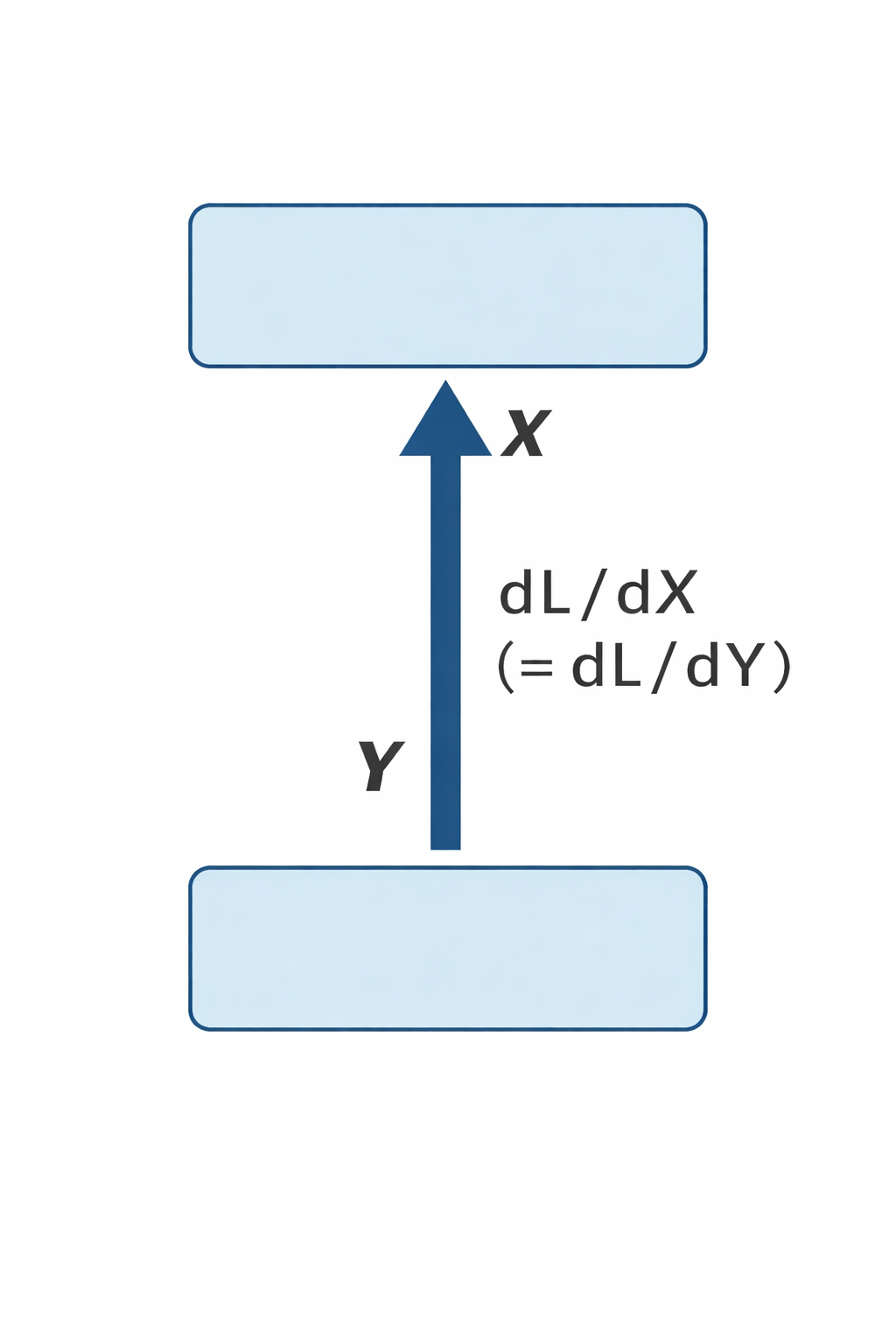
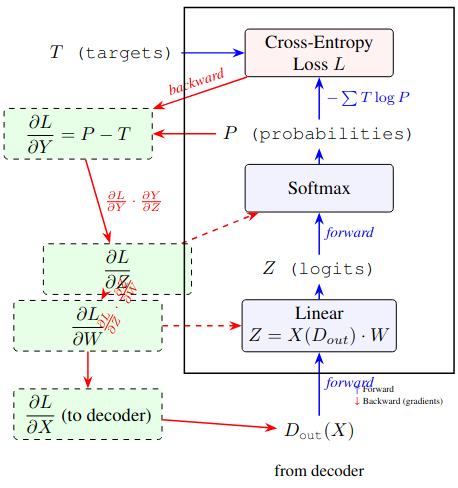
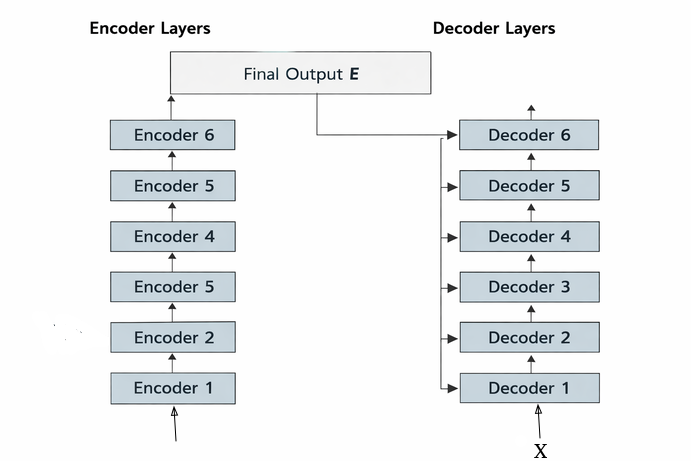
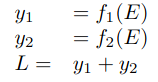
// https://forejune.co/cuda
// transformer.cpp: Encoder-Decoder Transformer

#include <iostream>
#include <fstream>
#include <vector>
#include <string>
#include <unordered_map>
#include <cmath>
#include <random>
#include <algorithm>
#include <iomanip>
#include <cassert>
#include "util.h"
#include "transformer.h"

using namespace std;

// ------------------------ Tokenizer class --------------------------

// -------------------------------
// Default constructor
// -------------------------------
Tokenizer::Tokenizer()
{
    nTokens = 0;

    // Initialize special tokens first
    addWord(PAD); // 0
    addWord(UNK); // 1
    addWord(BOS); // 2
    addWord(EOS); // 3
    addWord(SEP); // 4
}

// -------------------------------
// Build vocab from file
// -------------------------------
Tokenizer::Tokenizer(ifstream &fs) : Tokenizer()
{
    string line;

    while (getline(fs, line)) {
        vector<string> tokens = split(line);	//split(line);
	for (int i = 0; i < tokens.size(); i++)
           addWord(tokens[i]);
    }
}

unordered_map<string, int> Tokenizer::getTokensWords()
{
    return words;
}

vector<int> Tokenizer::tokenize(const string& str)
{
  vector<int> ids;

  vector<string> tokens = split(str);

  for (int i = 0; i < tokens.size(); i++) {
    string w = tokens[i];
    if (words.find(w) != words.end())
      ids.push_back(words[w]);
    else
      ids.push_back(words[UNK]);
  }

  return ids;
}

string Tokenizer::detokenize(const vector<int>& tokenIDs)
{
    string words;

    int n = tokenIDs.size();
    for (int i = 0; i < n; i++) {
  	int id = tokenIDs[i];
        if (wordIndex.find(id) == wordIndex.end())
        continue;

        string w = wordIndex[id];

        // Skip special tokens (optional behavior)
        if (w == "<PAD>" || w == "<BOS>" || w == "<EOS>")
        continue;

        words += w + " ";
    }

    return words;
}

int Tokenizer::get_nTokens() const
{
    return nTokens;
}

unordered_map<int, string>Tokenizer::get_wordIndex()
{
        return wordIndex;
}

//------------------   Embedding Class ------------------
Embedding::Embedding(int sequence_length, int embeddingDimension)
{
  nTokens = sequence_length;
  dim = embeddingDimension;
  // initialize embeddings as an nTokensxdim matrix with certain random values
  initMatrix(em_matrix, nTokens, dim);
}

// create embedding matrix with tokenIDs
matrixd Embedding::embed(const vector<int>& tokenIDs)
{
  matrixd embeddings;
  embeddings.reserve(tokenIDs.size()); // set capacity of embeddings vector
  for(int i = 0; i < tokenIDs.size(); i++) {
    if (tokenIDs[i] >= 0 && tokenIDs[i] < nTokens)
       embeddings.push_back(em_matrix[tokenIDs[i]]);
    else
      // Out-of-dictionary tokens
      embeddings.push_back(vector<double>(dim, 0.0));
   }

   return embeddings;
}

int Embedding::get_embedDim() const
{
       return dim;
}

int Embedding::get_nTokens() const
{
       return nTokens;
}

// optional
void Embedding::backProp(const vector<int>& tokenIDs,
                         const matrixd& dL_dX,
                         double eta)
{
    int nt = tokenIDs.size();

    for (int i = 0; i < nt; i++) {
        int token = tokenIDs[i];

        for (int j = 0; j < dim; j++)
            em_matrix[token][j] -= eta * dL_dX[i][j];
    }
}

// --------------------- Positional Encoding class ---------------
PositionalEncoding::PositionalEncoding(int max_seq_length, int embed_dimension)
{
      maxTokens = max_seq_length;
      dModel = embed_dimension;

      PE.resize(maxTokens, vector<double>(dModel));
      for (int pos = 0; pos < maxTokens; pos++) {
        for (int i = 0; i < dModel/2; i++) {
   	   PE[pos][2*i] = sin( pos / pow(10000, 2.0*i/dModel) );
	   PE[pos][2*i+1] = cos( pos / pow(10000, 2.0*i/dModel) );
	}
      }
}

void PositionalEncoding::extendPE(int new_maxTokens)
{
    if (new_maxTokens <= maxTokens) return;

    int oldMax = maxTokens;
    maxTokens = new_maxTokens;

    PE.resize(maxTokens, vector<double>(dModel, 0.0));

    for (int pos = oldMax; pos < maxTokens; pos++) {
        for (int i = 0; i < dModel; i += 2) {
            double denom = pow(10000.0, (double)i / dModel);
            PE[pos][i] = sin(pos / denom);

            if (i + 1 < dModel)
                PE[pos][i + 1] = cos(pos / denom);
        }
    }
}

// add positional encodings to embeddings
matrixd PositionalEncoding::addPE(const matrixd& embeddings)
{
    int nTokens = embeddings.size();
    int dim = embeddings[0].size();

    assert(dim == dModel);
    if (nTokens > maxTokens) {
        extendPE(nTokens);
    }
    matrixd x = embeddings;

    // scale before adding PE (optional)
    double scale = sqrt(dModel);
    for (int i = 0; i < nTokens; i++)
      for (int j = 0; j < dModel; j++)
        x[i][j] = embeddings[i][j] * scale + PE[i][j];

     return x;
}

matrixd PositionalEncoding::getPE()
{
    return PE;
}

// -------------------- Add & Norm Class---------------------------------
// constructor
AddnNorm::AddnNorm(int dModel)
{
    gamma.assign(dModel, 1.0);
    beta.assign(dModel, 0.0),
    eps = 1e-5;
}

matrixd AddnNorm::forward (const matrixd &A, const matrixd &B)
{
    matrixd x = addMat(A, B); // add two matrices
    int n = x.size();         // rows
    int m = x[0].size();      // cols
    mean.resize( n );
    var.resize( n );
    Zhat.resize(n, vector<double>(m, 0));
    matrixd Y(n, vector<double>(m));

    // normalize the result
    for (int i = 0; i < n; i++) {
       double sum = 0;      // sum of one row
       var[i] = 0;
       for (int j = 0; j < m; j++)
          sum += x[i][j];
       mean[i] = sum / m;  // mu_i, mean of i-th row

       sum = 0;
       for (int j = 0; j < m; j++) {
          double diff = x[i][j] - mean[i];
          sum += diff * diff;
       }
       var[i] = sum / m;
       for (int j = 0; j < m; j++) {
          double xd = (x[i][j] - mean[i]) / sqrt(var[i] + eps); //epsilon);
          Zhat[i][j] = xd;
	  Y[i][j] =  gamma[j] * xd + beta[j];
       }
    }

    return Y;  // final output of Add & norm
}


// Assume forward already filled: Zhat, mean, var
AddNormGrad AddnNorm::backProp(const matrixd &X, const matrixd &dL_dY, double eta)
{
    int nt = X.size();
    int m  = X[0].size();

    matrixd dL_dZ(nt, vector<double>(m, 0.0));
    matrixd dL_dZhat(nt, vector<double>(m, 0.0));

    vector<double> dL_dGamma(m, 0.0);	// gradient wrt gamma
    vector<double> dL_dBeta(m, 0.0);	// gradient wrt beta

    // 1. Compute dL_dGamma and dL_dBeta for each token
    for (int i = 0; i < nt; i++)
    {
        for (int j = 0; j < m; j++){
           dL_dBeta[j]  += dL_dY[i][j];
           dL_dGamma[j] += dL_dY[i][j] * Zhat[i][j];
        }

    }

    // 2. Backprop through LayerNorm (row-wise)
    for (int i = 0; i < nt; i++)
    {
        double inv_sigma = 1.0 / sqrt(var[i] + eps);

        // Step A: compute intermediate values
        vector<double> dL_dZhat(m);
        for (int j = 0; j < m; j++)
        {
            dL_dZhat[j] = dL_dY[i][j] * gamma[j];
        }

        double sum_dL_dZhat = 0.0;
        double sum_dL_dZhat_zhat = 0.0;

        for (int j = 0; j < m; j++)
        {
            sum_dL_dZhat += dL_dZhat[j];
            sum_dL_dZhat_zhat += dL_dZhat[j] * Zhat[i][j];
        }

        // Final gradient
        for (int j = 0; j < m; j++)
        {
            dL_dZ[i][j] = inv_sigma * (dL_dZhat[j] - sum_dL_dZhat / m
                 - Zhat[i][j] * sum_dL_dZhat_zhat / m);
        }
    }

    // 3. Update parameters
    for (int j = 0; j < m; j++)
    {
        gamma[j] -= eta * dL_dGamma[j];
        beta[j]  -= eta * dL_dBeta[j];
    }

    AddNormGrad grad;
    grad.dL_dA = dL_dZ;   // residual path
    grad.dL_dB = dL_dZ;   // sublayer path

    return grad;
}

// Optional setters (to plug in forward results)
void AddnNorm::setCache(const matrixd& zhat, const vector<double>& m,
		                 const vector<double>& v)
{
    Zhat = zhat;
    mean = m;
    var  = v;
}

// ---------------------------  Feed Forward -----------------------------------
FeedForward::FeedForward(int dModel0, int d_ff0)
{
    dModel = dModel0;
    d_ff = d_ff0;

    W1.resize(dModel, vector<double>(d_ff));
    W2.resize(d_ff, vector<double>(dModel));

    initMatrix(W1, dModel, d_ff);
    initMatrix(W2, d_ff, dModel);
}

// ------------------------------
// Forward (for cache)
// ------------------------------
matrixd FeedForward::FFoutput(const matrixd &X)
{
    Z  = matmul(X, W1);   // pre-activation
    F1 = relu( Z );  // f(Z);    F1 = f(XW1)
    matrixd F2 = matmul(F1, W2); // F2 = F1 W2

    return F2;
}

// ------------------------------
// Backprop
// ------------------------------
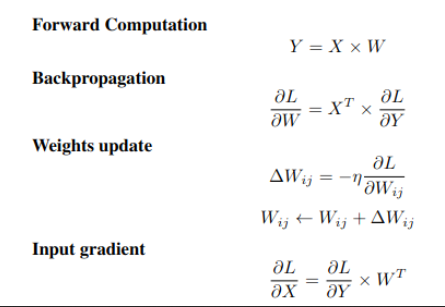
matrixd FeedForward::backProp(const matrixd &X, const matrixd &dL_dY,  // dL/dF2
             double eta)
{
    // ---- W2 ----
    matrixd dL_dF2 = dL_dY;

    // dL/dW2 = F1^T * dL_dF2
    matrixd F1T = transpose(F1);
    matrixd dL_dW2 = matmul(F1T, dL_dF2);

    // dL_dF1 = dL_dF2 * W2^T
    matrixd W2T = transpose(W2);
    matrixd dL_dF1 = matmul(dL_dF2, W2T);

    // ---- find dL_dZ1 ----
    matrixd fd_Z  = relu_deriv(Z); // f_deriv(Z);
    int rows = dL_dF1.size();
    int cols = dL_dF1[0].size();

    matrixd dL_dZ1 = dL_dF1;	  // same dimension
    for (int i = 0; i < rows; i++)
       for (int j = 0; j < cols; j++)
          dL_dZ1[i][j] = dL_dF1[i][j] * fd_Z[i][j];

    // ---- W1 ----
    // dL/dW1 = X^T * dL/dZ1
    matrixd XT = transpose(X);
    matrixd dL_dW1 = matmul(XT, dL_dZ1);

    // dL/dX = dL/dZ1 * W1^T
    matrixd W1T = transpose(W1);
    matrixd dL_dX = matmul(dL_dZ1, W1T);

    // ---- Update weights ----
    for (int i = 0; i < W2.size(); i++)
       for (int j = 0; j < W2[0].size(); j++)
          W2[i][j] -= eta * dL_dW2[i][j];

    for (int i = 0; i < W1.size(); i++)
       for (int j = 0; j < W1[0].size(); j++)
          W1[i][j] -= eta * dL_dW1[i][j];

    return dL_dX;	// This becomes the dL_dY of next stage
}

// ------------------ MultiHeadAttention --------------------
MultiHeadAttention::MultiHeadAttention(int dim, int n)
{
    dModel = dim;
    nHeads = n;
    d_k = dModel / nHeads;

    WQ.resize(nHeads);
    WK.resize(nHeads);
    WV.resize(nHeads);

    for (int h = 0; h < nHeads; h++) {
        initMatrix(WQ[h], dModel, d_k);
        initMatrix(WK[h], dModel, d_k);
        initMatrix(WV[h], dModel, d_k);
    }
    initMatrix(WO, dModel, dModel);
}

void MultiHeadAttention::clearCache()
{
    Qs.clear();
    Ks.clear();
    Vs.clear();
    Ps.clear();
    As.clear();
}

matrixd MultiHeadAttention::computeAttention(const matrixd &X_Q,
     const matrixd &X_K, const matrixd &X_V, bool mask)
{
    Qs.clear(); Ks.clear(); Vs.clear();
    Ps.clear(); As.clear();

    vector<matrixd> heads;

    int nq = X_Q.size();
    int nk = X_K.size();

    for (int h = 0; h < nHeads; h++) {
        matrixd Qh = matmul(X_Q, WQ[h]);  // nq x d_k
        matrixd Kh = matmul(X_K, WK[h]);  // nk x d_k
        matrixd Vh = matmul(X_V, WV[h]);  // nk x d_k

        matrixd S = matmul(Qh, transpose(Kh));
        scaleMat(S, 1.0 / sqrt(d_k));


        if (mask)
          S = causalMask(S);

        matrixd Ph = softmax(S);    // row-wise
        matrixd Ah = matmul(Ph, Vh);  // nq x d_k

        Qs.push_back(Qh);
        Ks.push_back(Kh);
        Vs.push_back(Vh);
        Ps.push_back(Ph);
        As.push_back(Ah);

        heads.push_back(Ah);
    }

    // Concatenate heads
    int n = heads[0].size();
    matrixd concat(n, vector<double>(dModel, 0.0));

    for (int h = 0; h < nHeads; h++)
       for (int i = 0; i < n; i++)
          for (int j = 0; j < d_k; j++)
             concat[i][h * d_k + j] = heads[h][i][j];

    // Final projection
    matrixd H = matmul(concat, WO);

    return H;
}

// backpropagation
MHA_Gradient MultiHeadAttention::backProp(
    const matrixd &X_Q,
    const matrixd &X_K,
    const matrixd &X_V,
    const matrixd &dL_dH,
    double eta,
    bool mask)
{
    if (Ps.empty() || As.empty()) {
      cout << "ERROR: MHA cache empty in backProp!" << endl;
      exit(1);
   }

    int nt = X_Q.size();

    double s = 1.0 / sqrt(d_k);

    // =========================
    // Step 1: concatenate heads
    // =========================
    matrixd A_cat(nt, vector<double>(dModel, 0.0));

    for (int h = 0; h < nHeads; h++)
        for (int i = 0; i < nt; i++)
            for (int j = 0; j < d_k; j++)
                A_cat[i][h*d_k + j] = As[h][i][j];

    // =========================
    // Step 2: gradients for WO
    // =========================
    matrixd dL_dWO = matmul(transpose(A_cat), dL_dH);

    // Compute before updating WO
    matrixd dL_dAcat = matmul(dL_dH, transpose(WO));

    // =========================
    // Step 3: initialize accumulators
    // =========================
    matrixd dL_dXQ(X_Q.size(), vector<double>(dModel, 0.0));
    matrixd dL_dXK(X_K.size(), vector<double>(dModel, 0.0));
    matrixd dL_dXV(X_V.size(), vector<double>(dModel, 0.0));

    // =========================
    // Step 4: per-head backprop
    // =========================
    for (int h = 0; h < nHeads; h++)
    {
        // ---- slice dA ----
        matrixd dL_dA(nt, vector<double>(d_k));
        for (int i = 0; i < nt; i++)
            for (int j = 0; j < d_k; j++)
                dL_dA[i][j] = dL_dAcat[i][h*d_k + j];

        matrixd P = Ps[h];
        matrixd V = Vs[h];
        matrixd Q = Qs[h];
        matrixd K = Ks[h];

        // =====================
        // A = P V
        // =====================
        matrixd dL_dP = matmul(dL_dA, transpose(V));
        matrixd dL_dV = matmul(transpose(P), dL_dA);

        // optional stabilization
        //scaleMat(dL_dP, 1.0 / nt);

        // =====================
        // softmax backward
        // =====================
        matrixd dL_dS = softmax_derivative(dL_dP, P);

        // apply mask if used
        if (mask) {
            for (int i = 0; i < nt; i++)
                for (int j = i+1; j < nt; j++)
                    dL_dS[i][j] = 0.0;
        }

        // =====================
        // S = (Q K^T) * s
        // =====================
        matrixd dL_dQ = matmul(dL_dS, K);
        matrixd dL_dK = matmul(transpose(dL_dS), Q);

        scaleMat(dL_dQ, s);
        scaleMat(dL_dK, s);

        // =====================
        // Weight gradients
        // =====================
        matrixd dL_dWQ = matmul(transpose(X_Q), dL_dQ);
        matrixd dL_dWK = matmul(transpose(X_K), dL_dK);
        matrixd dL_dWV = matmul(transpose(X_V), dL_dV);

        // =====================
        // Input gradients (USE OLD WEIGHTS!)
        // =====================
        matrixd dXQ = matmul(dL_dQ, transpose(WQ[h]));
        matrixd dXK = matmul(dL_dK, transpose(WK[h]));
        matrixd dXV = matmul(dL_dV, transpose(WV[h]));

        // accumulate across heads
        dL_dXQ = addMat(dL_dXQ, dXQ);
        dL_dXK = addMat(dL_dXK, dXK);
        dL_dXV = addMat(dL_dXV, dXV);

        // =====================
        // Update weights after gradients
        // =====================
        updateWeight(WQ[h], dL_dWQ, eta);
        updateWeight(WK[h], dL_dWK, eta);
        updateWeight(WV[h], dL_dWV, eta);
    }

    // =========================
    // Step 5: update WO
    // =========================
    updateWeight(WO, dL_dWO, eta);

    // =========================
    // return gradients
    // =========================
    MHA_Gradient grad;
    grad.dL_dQ = dL_dXQ;
    grad.dL_dK = dL_dXK;
    grad.dL_dV = dL_dXV;

    return grad;
}

// ---------- EncoderLayer --------------------
EncoderLayer::EncoderLayer(int d_model, int nHeads, int d_ff)
        : mha(d_model, nHeads),
          ffn(d_model, d_ff),
          norm1(d_model),
          norm2(d_model) {}

matrixd EncoderLayer::forward(const matrixd& input)
{
        X = input;
	mha.clearCache();
        matrixd A1 = mha.computeAttention(X, X, X, true);
        H1 = norm1.forward(X, A1);

        matrixd A2 = ffn.FFoutput(H1);
        H2 = norm2.forward(H1, A2);

        return H2;
}

matrixd EncoderLayer::backProp(const matrixd& dL_dY, double eta)
{
    // =========================
    // Step 1: FFN block
    // =========================
    AddNormGrad g2 = norm2.backProp(H1, dL_dY, eta);

    matrixd dL_dH1_res = g2.dL_dA;
    matrixd dL_dFFN_in = g2.dL_dB;

    matrixd dL_dH1_ffn = ffn.backProp(H1, dL_dFFN_in, eta);

    matrixd dL_dH1 = addMat(dL_dH1_res, dL_dH1_ffn);

    // =========================
    // Step 2: MHA block
    // =========================
    AddNormGrad g1 = norm1.backProp(X, dL_dH1, eta);

    matrixd dX_res = g1.dL_dA;
    matrixd dL_dMHA   = g1.dL_dB;

    MHA_Gradient g_mha = mha.backProp(X, X, X, dL_dMHA, eta, false);

    matrixd dL_dX_mha = addMat(g_mha.dL_dQ,
                       addMat(g_mha.dL_dK, g_mha.dL_dV));

    matrixd dL_dX = addMat(dX_res, dL_dX_mha);

    return dL_dX;
}

// ---------- OutputLayer ----------------------
OutputLayer::OutputLayer(int dim, int nv)
{
    dModel = dim;
    vocab_size = nv;

    initMatrix(W, dModel, vocab_size);
}

// Forward: logits -> probabilities
matrixd OutputLayer::forward(const matrixd &X)
{
    // X: (seq_len x dModel)
    // output: (seq_len x vocab_size)
    matrixd logits = matmul(X, W);

    return softmax(logits);
}

// Backward: returns dL/dX
matrixd OutputLayer::backward(const matrixd &X, const matrixd &P,
             const vector<int> &targets, double eta)
{
    int nt = P.size();

    // dL/dY = P - T (cross-entropy + softmax)
    matrixd dL_dY = P;
    for (int i = 0; i < nt; i++)
        dL_dY[i][targets[i]] -= 1.0;

    // optional but recommended: normalize
    for (int i = 0; i < nt; i++)
        for (int j = 0; j < P[0].size(); j++)
            dL_dY[i][j] /= nt;

    // Gradient wrt weights
    matrixd dL_dW = matmul(transpose(X), dL_dY);

    // Gradient wrt input (back to decoder)
    matrixd dL_dX = matmul(dL_dY, transpose(W));

    //update weights after gradient computation
    updateWeight(W, dL_dW, eta);

    return dL_dX;
}

// ------------ Decoder Layer -------------------
DecoderLayer::DecoderLayer(int d_model, int nHeads, int d_ff)
        : self_mha(d_model, nHeads),
          cross_mha(d_model, nHeads),
          ffn(d_model, d_ff),
          norm1(d_model),
          norm2(d_model),
          norm3(d_model) {}

matrixd DecoderLayer::forward(const matrixd& input,
                    const matrixd& encoder_output)
{
    X = input;
    E = encoder_output;
    self_mha.clearCache();
    matrixd A1 = self_mha.computeAttention(X, X, X, true);
    H1 = norm1.forward(X, A1);

    cross_mha.clearCache();
    matrixd A2 = cross_mha.computeAttention(H1, E, E, false);
    H2 = norm2.forward(H1, A2);

    matrixd A3 = ffn.FFoutput(H2);
    H3 = norm3.forward(H2, A3);

    return H3;
}

DecoderGrad DecoderLayer::backProp(const matrixd& dL_dY, double eta)
{
    // =========================
    // Step 1: FFN
    // =========================
    AddNormGrad g3 = norm3.backProp(H2, dL_dY, eta);

    matrixd dL_dH2_res = g3.dL_dA;
    matrixd dL_dFFN_in = g3.dL_dB;

    matrixd dL_dH2_ffn = ffn.backProp(H2, dL_dFFN_in, eta);

    matrixd dL_dH2 = addMat(dL_dH2_res, dL_dH2_ffn);

    // =========================
    // Step 2: Cross Attention
    // =========================
    AddNormGrad g2 = norm2.backProp(H1, dL_dH2, eta);

    matrixd dL_dH1_res = g2.dL_dA;
    matrixd dL_dCross  = g2.dL_dB;
    MHA_Gradient g_cross =
        cross_mha.backProp(H1, E, E, dL_dCross, eta, false);

    matrixd dL_dEnc = addMat(g_cross.dL_dK, g_cross.dL_dV);  // encoder gradients
    matrixd dL_dH1  = addMat(dL_dH1_res, g_cross.dL_dQ);        // decoder path

    // =========================
    // Step 3: Self Attention
    // =========================
    AddNormGrad g1 = norm1.backProp(X, dL_dH1, eta);

    matrixd dL_dX_res = g1.dL_dA;
    matrixd dL_dSelf  = g1.dL_dB;

    MHA_Gradient g_self =
        self_mha.backProp(X, X, X, dL_dSelf, eta, true);

    matrixd dL_dSelf_mha = addMat(g_self.dL_dQ,
                         addMat(g_self.dL_dK, g_self.dL_dV));

    matrixd dL_dX = addMat(dL_dX_res, dL_dSelf_mha);

    return {dL_dX, dL_dEnc};
}

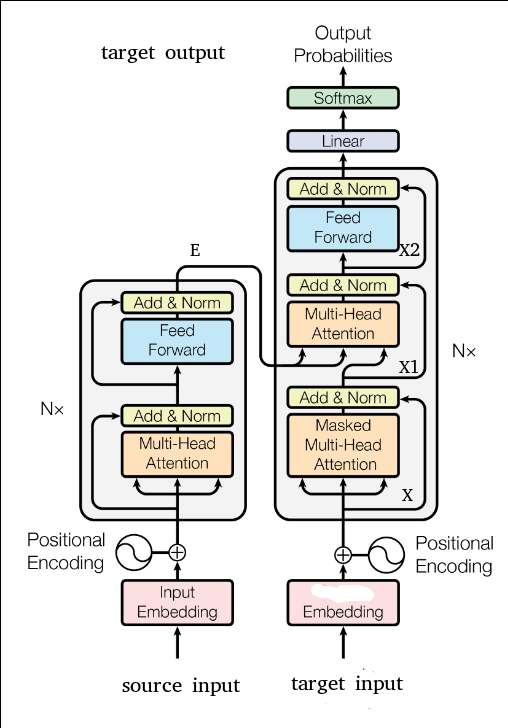
// ------------  Transformer (Encoder-Decoder) -------------------
MiniTrans::MiniTrans(int vocab_size_, int seq_len_,
                     int dModel_, int nHeads,
                     int d_ff, int nLayers)
    : embed(vocab_size_, dModel_),
      pe(seq_len_, dModel_),
      output(dModel_, vocab_size_)
{
    vocab_size = vocab_size_;
    seq_len = seq_len_;
    dModel = dModel_;

    for (int i = 0; i < nLayers; i++) {
	EncoderLayer e = EncoderLayer(dModel, nHeads, d_ff);
	eLayers.push_back( e );
	DecoderLayer d = DecoderLayer(dModel, nHeads, d_ff);
	dLayers.push_back( d );
    }
}

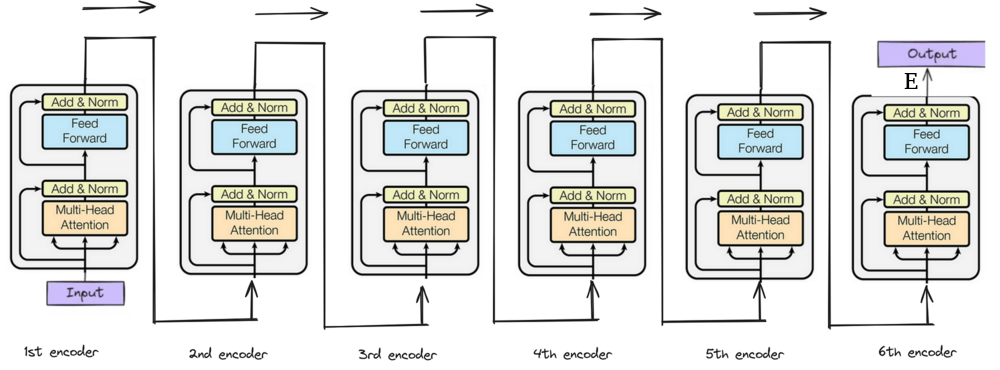
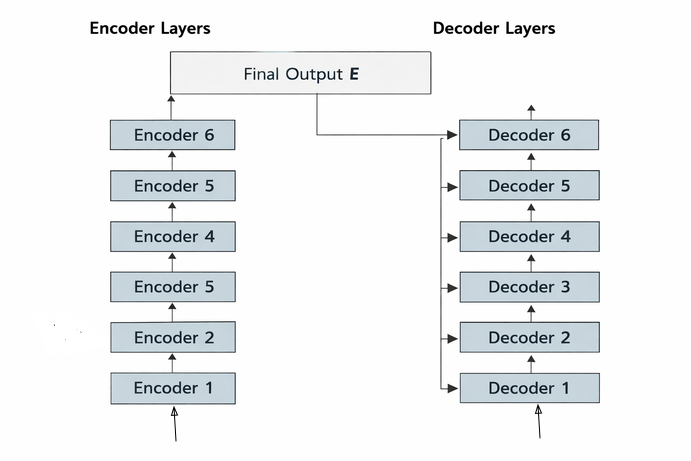
matrixd MiniTrans::forward(const vector<int> &source_tokens,
                           const vector<int> &target_in)
{
    // =========================
    // Encoder
    // =========================
    matrixd src_embed = embed.embed(source_tokens);
    matrixd src_pe    = pe.addPE(src_embed);

    matrixd E = src_pe;		// E will be final output of encoder
    for (int i = 0; i < eLayers.size(); i++)
        E = eLayers[i].forward(E);


    // =========================
    // Decoder
    // =========================
    matrixd tgt_embed = embed.embed(target_in);
    matrixd tgt_pe    = pe.addPE(tgt_embed);

    matrixd dec = tgt_pe;
    for (int i = 0; i < dLayers.size(); i++)
        dec = dLayers[i].forward(dec, E);

    // cache final decoder output (IMPORTANT for backward)
    dec_out = dec;

    // =========================
    // Output layer
    // =========================
    matrixd P = output.forward(dec_out);

    return P;
}

double MiniTrans::trainStep(const vector<int> &source,
                           const vector<int> &target_in,
                           const vector<int> &target_out,
                           double eta)
{
    // =========================
    // Step 1: Forward
    // =========================
    matrixd P = forward(source, target_in);

    double loss = crossEntropy(P, target_out);

    // =========================
    // Step 2: Output backward
    // =========================
    matrixd dL_dX = output.backward(dec_out, P, target_out, eta);

    // =========================
    // Step 3: Decoder backward
    // =========================
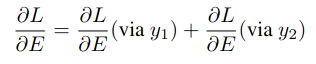
    matrixd dL_dE;   // accumulate gradients to encoder
    bool first = true;

    // accumulate encoder gradients dL_dE
    for (int i = dLayers.size() - 1; i >= 0; i--) {
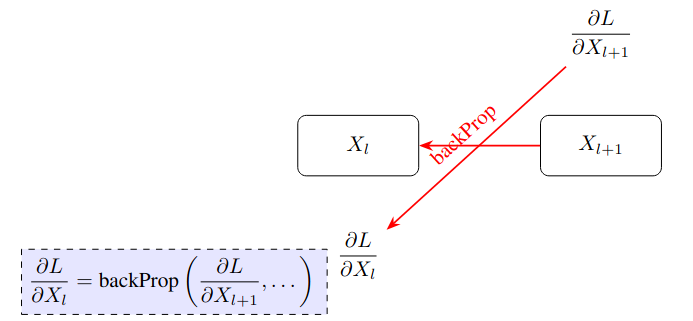
        DecoderGrad g = dLayers[i].backProp(dL_dX, eta);

        dL_dX = g.dL_dX;

        if (first) {
            dL_dE = g.dL_dE;
            first = false;
        } else {
            dL_dE = addMat(dL_dE, g.dL_dE);
        }
    }
    // =========================
    // Step 4: Encoder backward
    // =========================
    for (int i = eLayers.size() - 1; i >= 0; i--)
        dL_dE = eLayers[i].backProp(dL_dE, eta);

    // =========================
    // Step 5: Embedding update, optional
    // =========================
    embed.backProp(source, dL_dE, eta);      // encoder side
    embed.backProp(target_in, dL_dX, eta);   // decoder side

    return loss;
}

vector<int> MiniTrans::generate(const vector<int> &source, int max_len,
                                    int start_token, int end_token)
{
    // =========================
    // Pass source through encoder
    // =========================
    matrixd src_embed = embed.embed(source);
    matrixd src_pe    = pe.addPE(src_embed);

    matrixd E = src_pe;
    for (int i = 0; i < eLayers.size(); i++)
        E = eLayers[i].forward(E);

    // =========================
    // Initialize sequence
    // =========================
    vector<int> generated;
    generated.push_back(start_token);

    // =========================
    // Autoregressive loop
    // =========================
    for (int step = 0; step < max_len; step++)
    {
        // embed current sequence
        matrixd target_embed = embed.embed(generated);
        matrixd target_pe    = pe.addPE(target_embed);

        matrixd dec = target_pe;

        // pass through decoder
        for (int i = 0; i < dLayers.size(); i++)
            dec = dLayers[i].forward(dec, E);

	matrixd P = output.forward(dec);
	vector<double> last = P.back();   //last row of matrix P
        int best_token = max_element(last.begin(), last.end()) - last.begin();
        generated.push_back(best_token);

        if (best_token == end_token)
            break;
    }

    return generated;
}
|