Backpropagation of an AI Transformer in C/C++
Materials available at: https://forejune.co/cuda/
Transformer Layers
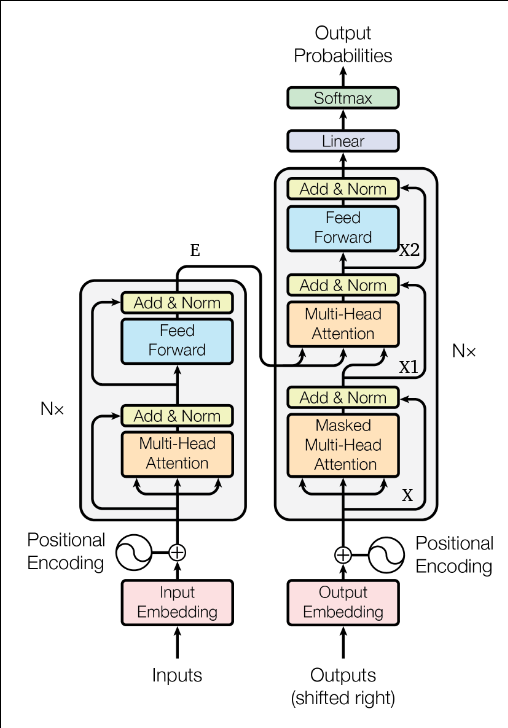
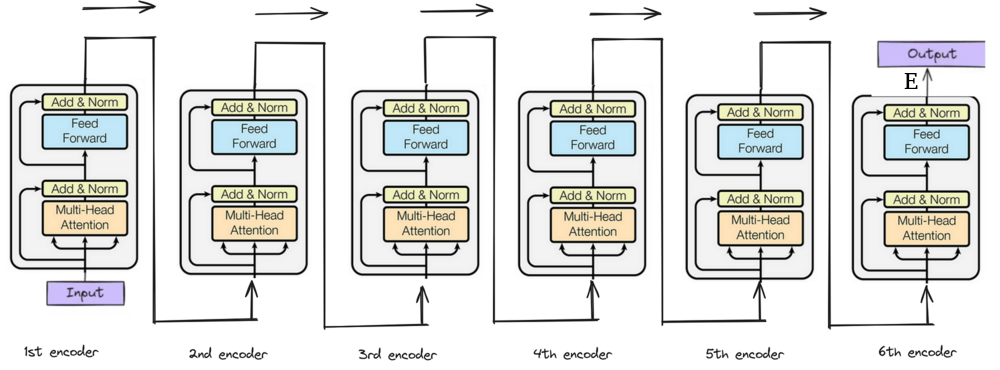
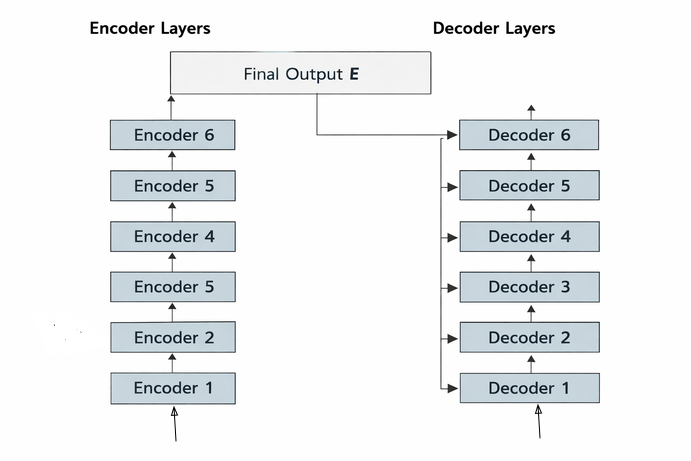
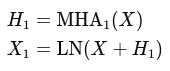
Forward Pass of a Decoder
Inputs:
Masked Self-Attention:
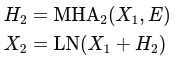
Cross Attention:
Feed-forward Network:
|
|


Materials available at: https://forejune.co/cuda/
Transformer Layers
Forward Pass of a Decoder
Inputs:
Masked Self-Attention:
Cross Attention:
Feed-forward Network:
|
|
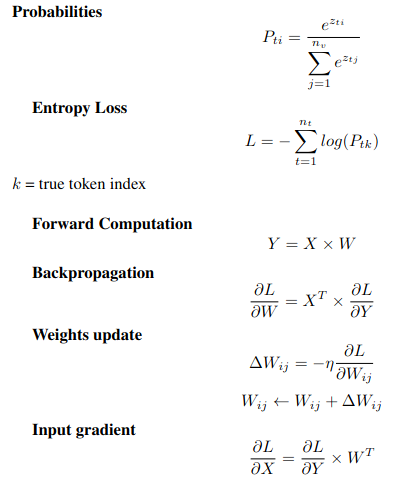
For each target token i 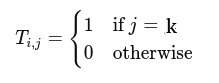
Don't need L to compute |
#include <vector>
#include <cmath>
#include <iostream>
#include "util.h"

using namespace std;

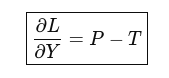
// Compute dL/dY
matrixd compute_dLdY(
    const matrixd &Y,   // logits (nt x nv)
    const vector<int>& target    // size nt (each in [0, nv-1])
)
{
    int nt = Y.size();
    int nv = Y[0].size();

    matrixd T;	// nt x nv
    T.assign(nt, vector<double>(nv, 0.0));

    matrixd dLdY = T;	// same dimensions

    for (int i = 0; i < nt; i++)
    {
        // Compute softmax probabilities
        vector<double> P = softmax(Y[i]);

        // Build one-hot target
        int k = target[i];
        T[i][k] = 1.0;

        // Compute gradient: dL/dY = P - T
        for (int j = 0; j < nv; j++)
        {
            dLdY[i][j] = P[j] - T[i][j];
        }
/*	Alternative code:
       // Start with P
        for (int j = 0; j < nv; j++)
            dLdY[i][j] = P[j];

        // Subtract 1 at correct class
        dLdY[i][target[i]] -= 1.0;*/
    }

    return dLdY;
}

int main()
{
    // Example: nt = 2 tokens, nv = 4 vocabulary
    matrixd Y = {
        {1.0, 2.0, 0.5, 0.5},
        {0.2, 0.1, 3.0, 0.3}
    };
    int nt = Y.size();
    int nv = Y[0].size();

    vector<int> target = {1, 2}; // correct indices

    matrixd dLdY = compute_dLdY(Y, target);

    // Print results
    cout << "dL/dY:\n";
    for (int i = 0; i < nt; i++){
      for (int j = 0; j < nv; j++)
            cout  << dLdY[i][j] << " ";
        cout << endl;
    }

    return 0;
}
|
Weights or Quantities to be Updated:
The Backward Pass:
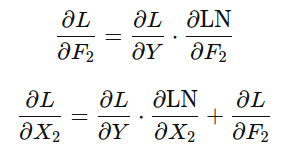
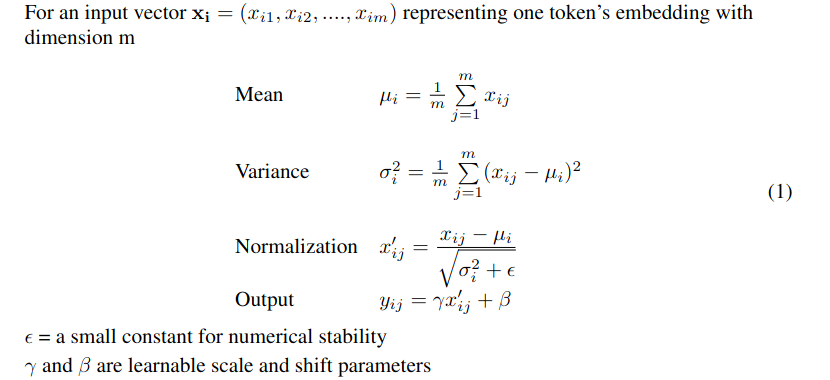
Final LayerNorm (Output):
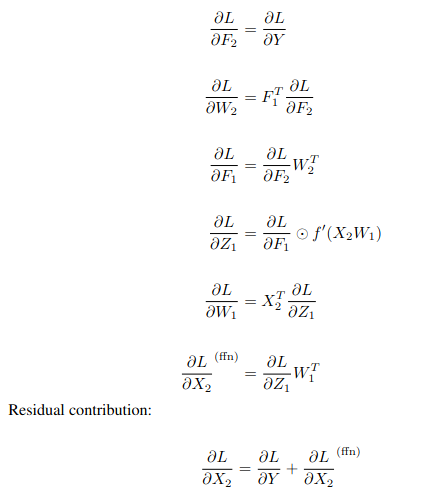
Feed-Forward Network:
|
Simplified
Relu activation function 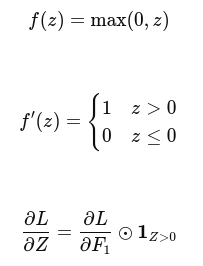

Z1 = Z = X2W1 |
Cross Multi-Head Attention:
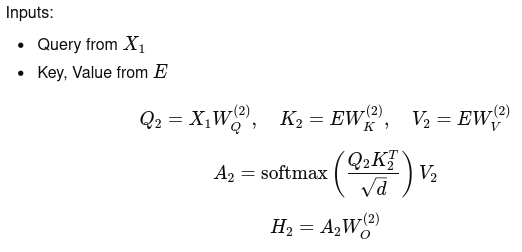
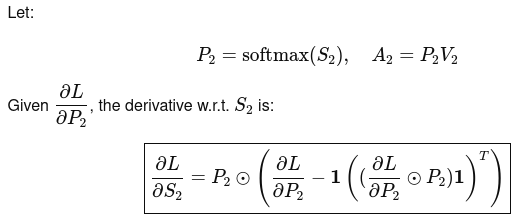
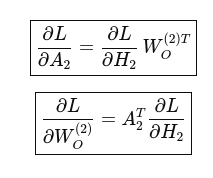
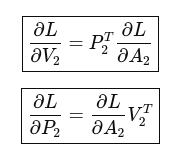
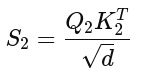
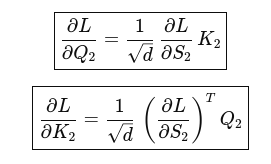
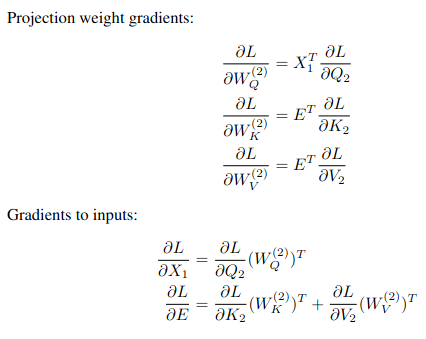
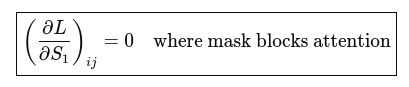
Masked Attention:
nt = number of tokens in target sequence
ns = number of tokens in source sequence
dmodel = model dimension
nv = vocabulary size

Decoder input X  :	nt x dmodel
Decoder output Y :	nt x nv
Encoder output E :	ns x dmodel
Linear weights W :	dmodel x nv
Logits Z = X x W :	nt x nv
Probabilities P  :	nt x nv
Target matrix T  :	nt x nv
Loss L		 :	a scalar
γ, β             : 	1 x dmodel
Gradient ∂L/∂β   : 	1 x dmodel
Gradient Loss wrt output ∂L/∂Y  : nt x nv
Gradient Loss wrt weights ∂L/∂W : dmodel x nv
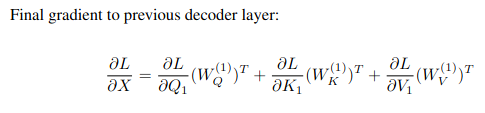
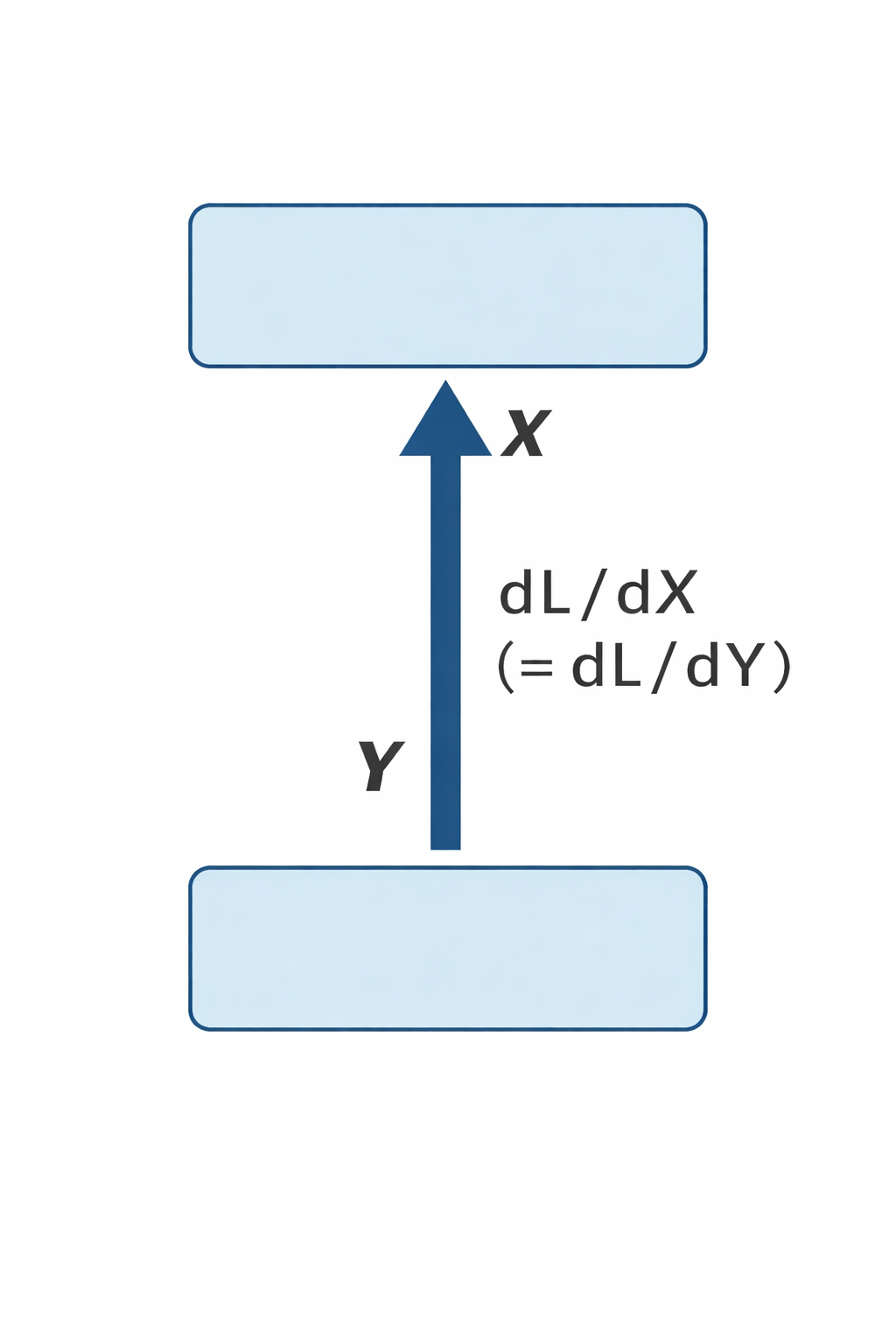
Gradient Loss wrt input  ∂L/∂X  : nt x dmodel
Backprop
 |
(~ x'ij above) |
Parameter Gradients: 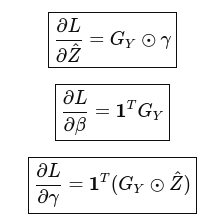
Backprop to input: 
|
typedef vector<vector<double>> matrixd;

class AddnNorm
{
private:
    vector<double> gamma;   // size dModel
    vector<double> beta;    // size dModel

    matrixd Zhat;           // normalized values (nt x d)
    vector<double> mean;    // per row (nt)
    vector<double> var;     // per row (nt)

    double eps;		    // small value

public:
    // constructor
    AddnNorm(int dModel)
    {
       gamma.assign(dModel, 1.0);
       beta.assign(dModel, 0.0),
       eps = 1e-5;
    }

    // Assume forward already filled: Zhat, mean, var
    matrixd backProp(const matrixd &X,
                     const matrixd &dL_dY,
                     double eta)
    {
        int nt = X.size();
        int m  = X[0].size();

        matrixd dL_dZ(nt, vector<double>(m, 0.0));

        vector<double> dL_dGamma(m, 0.0);//gradient wrt gamma
        vector<double> dL_dBeta(m, 0.0); //gradient wrt beta

        // 1. Compute dL_dGamma and dL_dBeta for each token
        for (int i = 0; i < nt; i++)
        {
            for (int j = 0; j < m; j++)
            {
                dL_dBeta[j]  += dL_dY[i][j];
                dL_dGamma[j] += dL_dY[i][j] * Zhat[i][j];
            }
        }

        // 2. Update parameters
        for (int j = 0; j < m; j++)
        {
            gamma[j] -= eta * dL_dGamma[j];
            beta[j]  -= eta * dL_dBeta[j];
        }

        // 3. Backprop through LayerNorm (row-wise)
        for (int i = 0; i < nt; i++)
        {
            double inv_sigma = 1.0 / sqrt(var[i] + eps);

            // Step A: compute intermediate values
            vector<double> dL_dZhat(m);
            for (int j = 0; j < m; j++)
            {
                dL_dZhat[j] = dL_dY[i][j] * gamma[j];
            }

            double sum_dL_dZhat = 0.0;
            double sum_dL_dZhat_zhat = 0.0;

            for (int j = 0; j < m; j++)
            {
              sum_dL_dZhat += dL_dZhat[j];
              sum_dL_dZhat_zhat += dL_dZhat[j] * Zhat[i][j];
            }

            // Final gradient
            for (int j = 0; j < m; j++)
            {
                dL_dZ[i][j] =
                    inv_sigma *
                    (dL_dZhat[j]
                     - sum_dL_dZhat / m
                     - Zhat[i][j] * sum_dL_dZhat_zhat / m);
            }
        }

        return dL_dZ;
    }
};
|
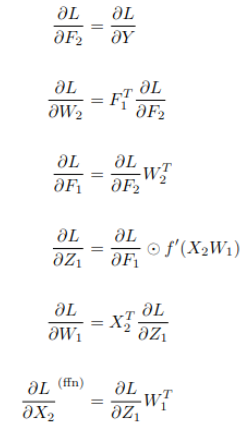
Feedforward Network:
|
class FeedForward
{
private:
    matrixd W1, W2;
    int dModel, d_ff;

    // cache
    matrixd F1;   // after activation function ReLU
    matrixd Z;    // before ReLU (needed for derivative)

public:
    FeedForward(int dModel_, int d_ff_)
    {
	........
    }

    // ------------------------------
    // Forward (for cache)
    // ------------------------------
    matrixd FFoutput(const matrixd &X)
    {
        Z  = matmul(X, W1);   // pre-activation
        F1 = f(Z);            // F1 = f(XW1)
        matrixd F2 = matmul(F1, W2); // F2 = F1 W2

	return F2;
    }

    // ------------------------------
    // Backprop
    // ------------------------------
    matrixd backProp(const matrixd &X,
                    const matrixd &dL_dY,  // dL/dF2
                     double eta)
    {
        // ---- W2 ----
	matrixd dL_dF2 = dL_dY;
        // dL/dW2 = F1^T * dL_dF2
        matrixd F1T = transpose(F1);
        matrixd dL_dW2 = matmul(F1T, dL_dF2);

        // dL_dF1 = dL_dF2 * W2^T
        matrixd W2T = transpose(W2);
        matrixd dL_dF1 = matmul(dL_dF2, W2T);

        // ---- find dL_dZ1 ----
        matrixd fd_Z  = f_deriv(Z);
       int rows = dL_dF1.size();
       int cols = dL_dF1[0].size();

	matrixd dL_dZ1 = dL_dF1;	  // same dimension
        for (int i = 0; i < rows; i++)
            for (int j = 0; j < cols; j++)
                dL_dZ1[i][j] = dL_dF1[i][j] * fd_Z[i][j];

        // ---- W1 ----
        // dL/dW1 = X^T * dL/dZ1
        matrixd XT = transpose(X);
        matrixd dL_dW1 = matmul(XT, dL_dZ1);

        // dL/dX = dL/dZ1 * W1^T
        matrixd W1T = transpose(W1);
        matrixd dL_dX = matmul(dL_dZ1, W1T);

        // ---- Update weights ----
        for (int i = 0; i < W2.size(); i++)
            for (int j = 0; j < W2[0].size(); j++)
                W2[i][j] -= eta * dL_dW2[i][j];

        for (int i = 0; i < W1.size(); i++)
            for (int j = 0; j < W1[0].size(); j++)
                W1[i][j] -= eta * dL_dW1[i][j];

        return dL_dX;	// This becomes the dL_dY of next stage
    }
};
|
Multi-head Attention:
Softmax Derivative
row-sum(...) produces a column vector
(nt x 1) then broadcast across
columns
Implementations use single-head math but full matrix |
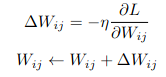
void weightUpdate(matrixd &W, const matrixd &dL_dW, const double eta)
{
   for (int i = 0; i < W.size(); i++)
     for (int j = 0; j < W[0].size(); j++)
         W[i][j] -= eta * dL_dW[i][j];
}

class MultiHeadAttention {
private:
    int dModel, nHeads, d_k;
    matrixd WQ, WK, WV, WO;

public:
    MultiHeadAttention(int dModel, int nHeads)
        : dModel(dModel), nHeads(nHeads)
    {

        d_k = dModel / nHeads;
	....
    }

    // ----------- Forward -----------
    matrixd computeAttention(const matrixd &X_Q,
                             const matrixd &X_K,
                             const matrixd &X_V,
                             bool mask) {
        .....

        return H;
    }

   // ----------- Backprop -----------
   matrixd softmax_derivative(const matrixd &dL_dP,
		   const matrixd &P)
   {
        int nt = P.size(), ns = P[0].size();
        matrixd dL_dS(nt, vector<double>(ns,0));

        for (int i = 0; i < nt; i++)
        {
          double dot = 0.0;
	  // dot product of two row-vectors
          for (int j = 0; j < ns; j++)
            dot += P[i][j] * dL_dP[i][j];

	  // dot used by all columns of dL/dA
          for (int j = 0; j < ns; j++)
             dL_dS[i][j] = P[i][j] * (dL_dP[i][j] - dot);
        }

        return dL_dS;
    }

    matrixd backProp(const matrixd &X_Q,
                     const matrixd &X_K,
                     const matrixd &X_V,
                     const matrixd &dL_dH,
                     double eta,
                     bool mask) {

        // ---- Forward recompute (needed for gradients) ----
        matrixd Q = matmul(X_Q, WQ);
        matrixd K = matmul(X_K, WK);
        matrixd V = matmul(X_V, WV);

        matrixd S = matmul(Q, transpose(K));  // nt x nt
        double scale = 1.0 / sqrt((double)d_k);
	int n, m;
	scaleMat(S, scale);

        matrixd P = softmax(S, mask);
        matrixd A = matmul(P, V);

        // ---- Backprop starts ----

        // (1) dL/dA
        matrixd dL_dA = matmul(dL_dH, transpose(WO));

        // (2) dL/dWO
        matrixd dL_dWO = matmul(transpose(A), dL_dH);

        // (3) dL/dV
        matrixd dL_dV = matmul(transpose(P), dL_dA);

        // (4) dL/dP
        matrixd dL_dP = matmul(dL_dA, transpose(V));

        // (5) softmax backward --> dL/dS
        matrixd dL_dS =  softmax_derivative(dL_dP, P);

        // (6) dL/dQ, dL/dK
        matrixd dL_dQ = matmul(dL_dS, K);
	scaleMat(dL_dQ, scale);
        matrixd dL_dK = matmul(transpose(dL_dS), Q);
	scaleMat(dL_dK, scale);

        // (7) weight gradients
        matrixd dL_dWQ = matmul(transpose(X_Q), dL_dQ);
        matrixd dL_dWK = matmul(transpose(X_K), dL_dK);
        matrixd dL_dWV = matmul(transpose(X_V), dL_dV);

        // (8) input gradients
        matrixd dL_dXQ = matmul(dL_dQ, transpose(WQ));
        matrixd dL_dXK = matmul(dL_dK, transpose(WK));
        matrixd dL_dXV = matmul(dL_dV, transpose(WV));

	// (9) weights update
	weightUpdate(WQ, dL_dWQ, eta);
	weightUpdate(WK, dL_dWK, eta);
	weightUpdate(WV, dL_dWV, eta);
	weightUpdate(WO, dL_dWO, eta);

        // Return gradient wrt X_Q (for chaining)
        return dL_dXQ;		// dL/dX1
    }
};
|