A Hello-World Example of AI Transformer in C/C++ and CUDA
Materials available at: https://forejune.co/cuda/
Introduction
tokenization and embedding
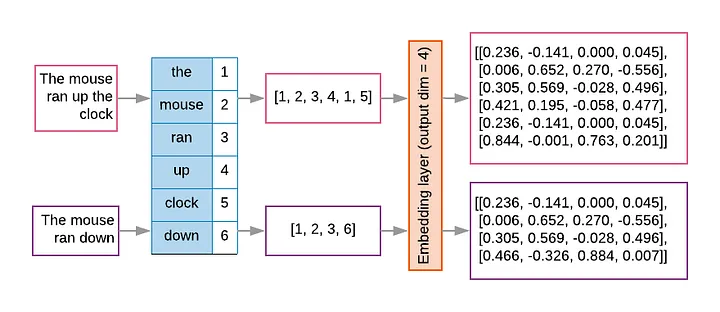
Example:
- A vocabulary has 10,000 tokens,
- Each embedding has 300 dimensions
- The embedding matrix is 10,000 x 300
Example:
			A dog bit a man! is mundane news.
			A man bit a dog! is a sensational headline.
Transformer

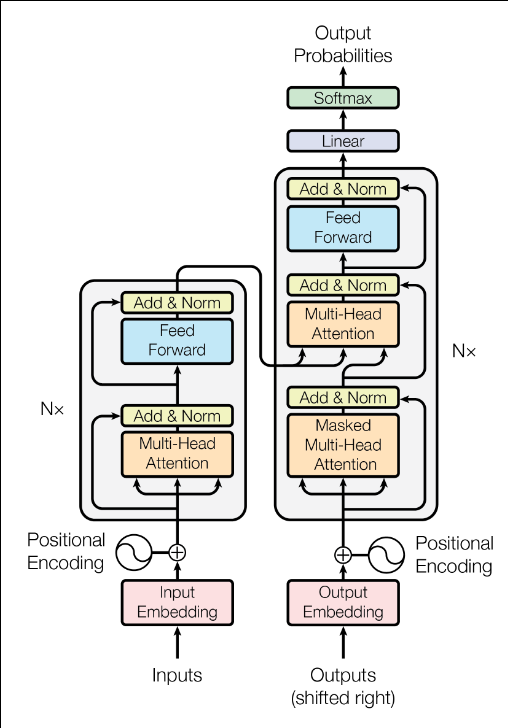
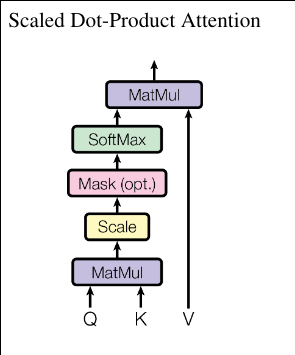
|
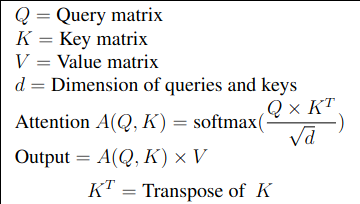
|
|
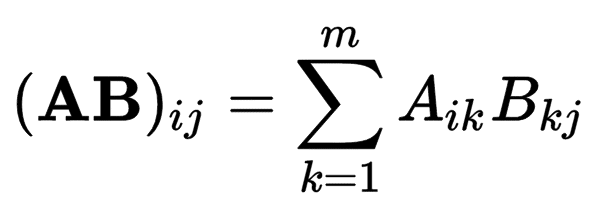
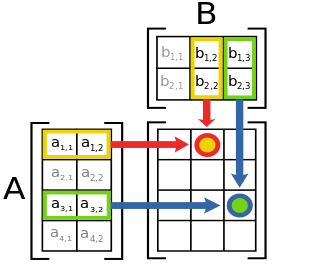
Each element of A x B is a dot product of a row vector of A and a column vector of B. Dimensions: A: 4 x 2 B: 2 x 3 ----------------- AxB: 4 x 3 |
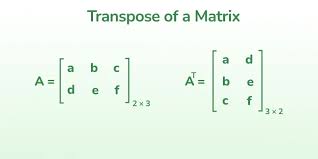
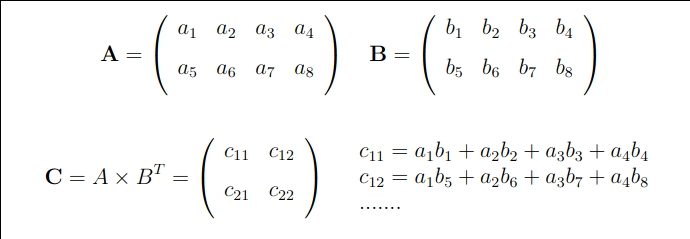
Note that the dimension of A X BT X A has the same dimension as A.
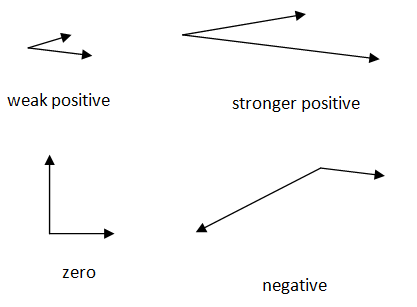
Consider two unit physical vectors. If they point in the same direction, dot-product = 1 If they are perpendicular to each other, dot-product = 0 If they point in opposite direction, dot-product = -1 dot-product ~ corelation or similarity between two vectors |
|

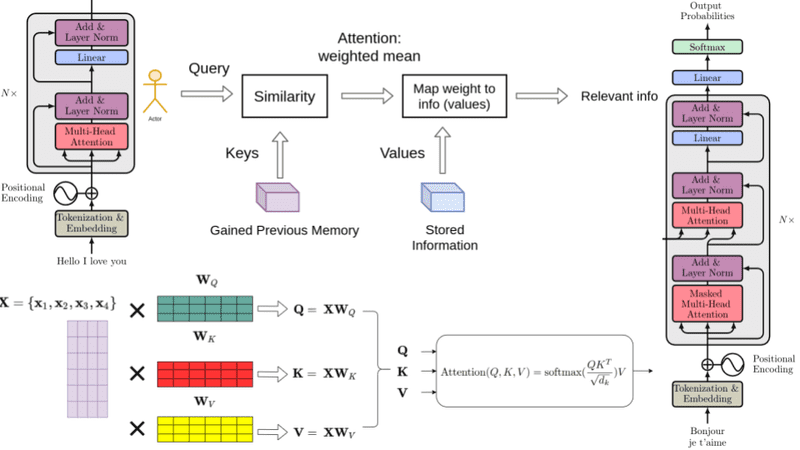
- Attention outputs are not used to update the Value (V) matrix
- The gradients derived from them during backpropagation are used to update V
- Note that weight matrices WQ,WK,WV are not the same as the corresponding matrices Q, K and V.
- Q, K and V are generated from the weight matrices, e.g.
Input Sequence (X) → X WV → V → Attention Output
(Provides gradient to update V)↑ ↑ ↑ Token
EmbeddingsLearned Weights
(Updated via gradients)Computed per input
(Not learned)
- Summary:
Matrix Origin When & How it's Updated Value Matrix (V) A projection of the input, used as the source for the weighted sum. Not updated during the forward pass. Value Weight Matrix (WV) The learned parameters that produce V from the input. Updated during the backward pass of training via gradient descent. Attention Output The weighted sum of V, Provides the gradient for updating WV.
C/C++ Implementation
CUDA Implementation
// transformer.cpp -- A hello-world example of transformer
// https://forejune.co/cuda/

#include <iostream>
#include <vector>
#include <cmath>
#include <random>
#include <algorithm>

using namespace std;

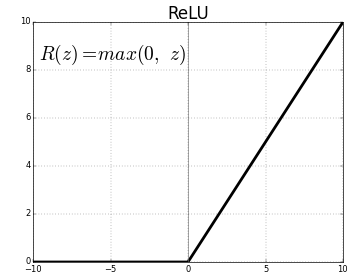
// Activation function: using ReLU (Rectified Linear Unit)
double f(double z)
{
  return max(0.0, z);
}
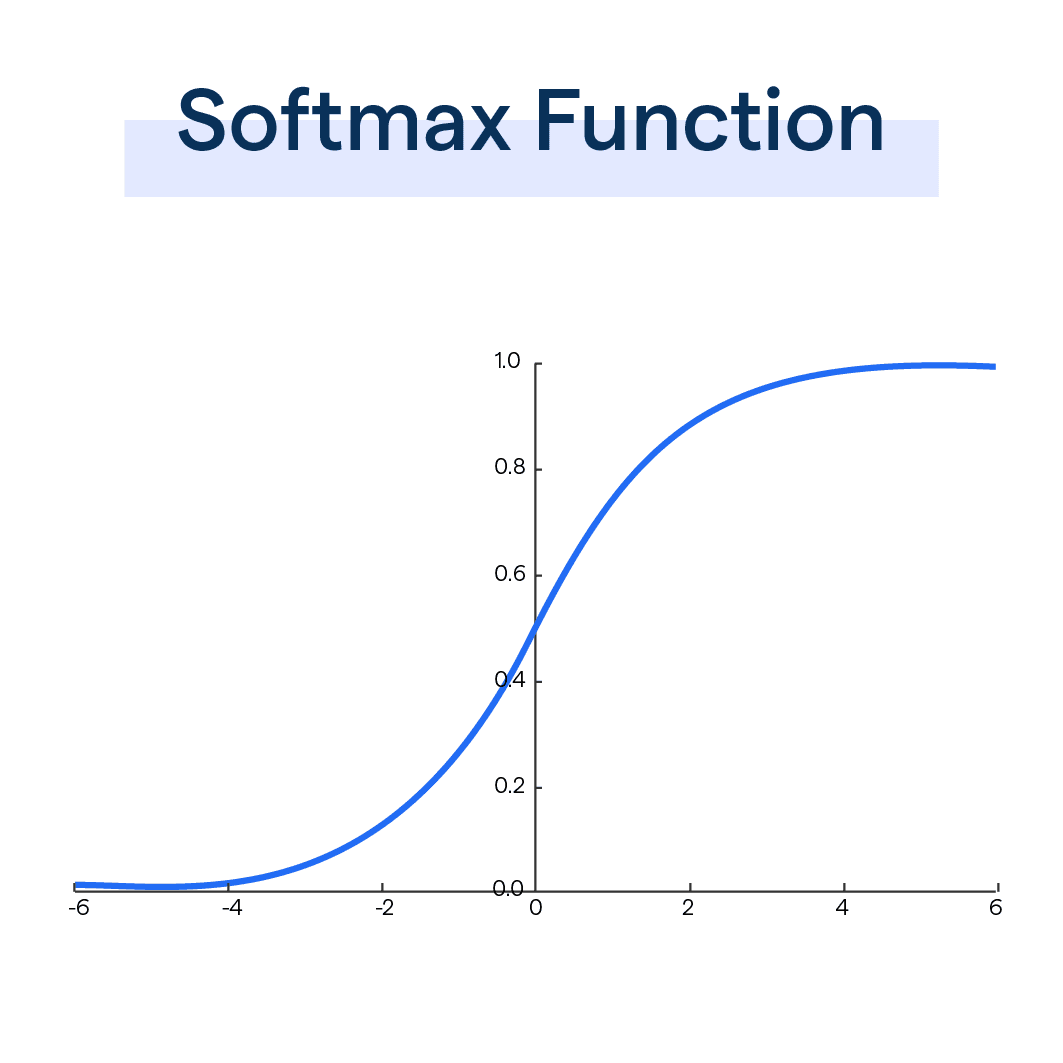
// softmax activation function, 2D input vector
vector<vector<double>>
    softmax(const vector<vector<double>>& input)
{
  int n = input.size(), m = input[0].size();// n x m matrix

  // 2D output vector n x m y[n][m]
  vector< vector< double>> y(n, vector< double>(m));

  for (int i = 0; i < n; i++) {
    //maximum value of the row
    double maxVal=*max_element(input[i].begin(),input[i].end());

    double sum = 0;
    // Subtract max for numerical stability
    for (int j = 0; j < m; j++) {
      y[i][j] = exp(input[i][j] - maxVal);
      sum += y[i][j];
    }

    // Normalize
    for (int j = 0; j < input[i].size(); j++)
      y[i][j] /= sum;
  }

  return y;
}
// Matrix multiplication   C = A X B   A: nxm, B: mxr, C: nxr
vector<vector<double>> matmul(const vector<vector<double>>& A,
                              const vector<vector<double>>& B)
{
  int n  = A.size();
  int m = A[0].size();
  int r = B[0].size();

  vector<vector<double>> C(n, vector<double>(r, 0));

  for (int i = 0; i < n; i++)
    for (int j = 0; j < r; j++)
      for (int k = 0; k < m; k++)
        C[i][j] += A[i][k] * B[k][j];

   return C;
}

// Transpose matrix n x m, B = A^T : m x n
vector<vector<double>> transpose(const vector<vector<double>>& A)
{
   int n = A.size();	//number of rows
   int m = A[0].size(); //number of columns

   vector<vector<double>> B(m, vector<double>(n));   // m x n

   for (int i = 0; i < n; i++)
     for (int j = 0; j < m; j++)
       B[j][i] = A[i][j];

   return B;
}

// Generating Random weights
void randomWeights(vector<vector<double>> &w )
{
  int n = w.size();
  int m = w[0].size();
  for (int i = 0; i < n; i++) {
    for (int j = 0; j < m; j++) {
      w[i][j] = (rand() % 1000) /1000.0;
      if ( rand() % 3 == 0 )
	 w[i][j] = -w[i][j];
     }
   }
}
// Hello-word transformer class
class HelloWorldTransformer
{
private:
    int d;  	 // Dimension of the model
    int nTokens; // Sequence length

    //Scaled dot-product attention, Q:Query, K:Key, V:Value
    vector<vector<double>> scaled_attention(
        const vector<vector<double>>& Q,
        const vector<vector<double>>& K,
        const vector<vector<double>>& V)
    {

      // Q X K^T
      vector<vector<double>>QxKT = matmul(Q, transpose(K));

      // Scale by sqrt(d_k)
      double d = K[0].size();
      double scale = sqrt(d);
      for (int i = 0; i < QxKT.size(); i++)
	for(int j = 0; j < QxKT[i].size(); j++)
	    QxKT[i][j] /= scale;

      // Apply softmax
      vector<vector<double>> attention_weights = softmax(QxKT);

      // Multiply by V --> A x V
      return matmul(attention_weights, V);
    }
public:
    HelloWorldTransformer(int sequence_len, int model_dim)
    {
	nTokens = sequence_len;
        d = model_dim;
    }

    // Simple self-attention layer
    vector<vector<double>> self_attention(const vector<vector<double>>& Q0,
	const vector<vector<double>>& K0, const vector<vector<double>>& V0)
    {
        auto Q = Q0;
        auto K = K0;
        auto V = V0;

        //return scaled_dot_product_attention(Q, K, V);
        return scaled_attention(Q, K, V);
    }
};

void printMatrix(const vector<vector<double>> &A)
{
    for (const auto& row : A) {
        for (double val : row) {
            printf("%6.2f ", val);
        }
        cout << endl;
    }
    cout << endl;
}

int main()
{
    srand(time (0));
    // Configuration
    int nTokens = 3;    // Number of tokens  (3 tokens)
    int d = 4;         // Embedding dimension

    // Create transformer
    HelloWorldTransformer transformer(nTokens, d);

     // 3 tokens with 4 features (dimensions)
     vector<vector<double>> X = {
        {1, 0, 1, 0},
        {0, 1, 0, 1},
        {1, 1, 1, 1}
    };

   // weight matrices
   vector<vector<double>> WQ(d, vector<double>(d));
   vector<vector<double>> WK(d, vector<double>(d));
   vector<vector<double>> WV(d, vector<double>(d));
   randomWeights( WQ );
   randomWeights( WK );
   randomWeights( WV );

    // Compute Q, K, V
    auto Q = matmul(X, WQ);	//Q = X x WQ: nTokens x d
    auto K = matmul(X, WK);	//Q = X x WK: nTokens x d
    auto V = matmul(X, WV);	//Q = X x WV: nTokens x d

    cout << "Q, K, V embeddings:\n";
    printMatrix( Q );
    printMatrix( K );
    printMatrix( V );

    // Apply self-attention: Q, K, V
    auto output = transformer.self_attention(Q, K, V);

    cout << "Output after self-attention:\n";
    printMatrix( output );

    // Simple feed-forward network: FFN(x) = ReLU(W1*x)
    // W1[d][d]: weights for generating linear sums from attention output
    vector<vector<double>> W1 = {
        {-1,-1,0,1},
        {0,1,1,-1},
        {1,0,1,0},
        {1,1,1,0}
    };

    vector<vector<double>> z(nTokens, vector<double>(d));
    auto FFout = z;	// FFout has same dimensions as z
    z = matmul(output, W1);
    for (int i = 0; i < nTokens; i++)
      for(int j = 0; j < d; j++)
	FFout[i][j] = f(z[i][j]); //output of feed forward network

    cout << "Transformer Block Output:\n";
    printMatrix( FFout );

    return 0;
}
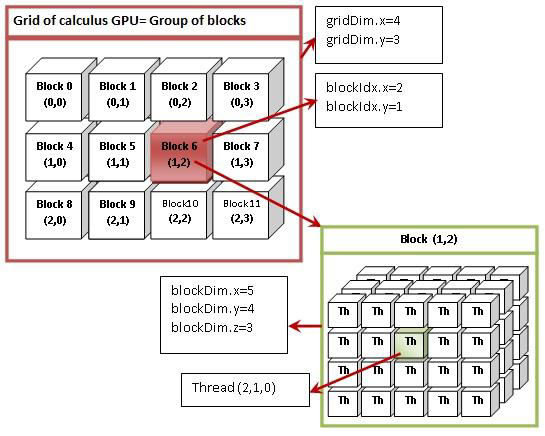
threadIdx.x = 2, threadIdx.y = 1, threadIdx.z = 0
// transformer.cu -- A hello-world example of transformer
// https://forejune.co/cuda/

#include <cstdio>
#include <cstdlib>
#include <cmath>
#include <cuda_runtime.h>

//Index for accessing nxm matrix element at position (i, j)
#define Idx(i,j,m) ((i)*(m)+(j))

/* ---------------- CUDA kernels ---------------- */

// C = A (nxm) x B (mxr)
__global__ void matmul(const double* A, const double* B, double* C,
                              int n, int m, int r)
{
    int row = blockIdx.y * blockDim.y + threadIdx.y;
    int col = blockIdx.x * blockDim.x + threadIdx.x;

    if (row < n && col < r) {
        double sum = 0.0;
        for (int k = 0; k < m; k++)
            sum += A[Idx(row,k,m)] * B[Idx(k,col,r)];
        C[Idx(row,col,r)] = sum;
    }
}

__global__ void transpose(const double* A, double* B, int n, int m)
{
    int row = blockIdx.y * blockDim.y + threadIdx.y;
    int col = blockIdx.x * blockDim.x + threadIdx.x;
    if (row < n && col < m)
        B[Idx(col,row,n)] = A[Idx(row,col,m)];
}
// Row-wise softmax, n threads work in parallel
__global__ void softmax(double* A, int n, int m)
{
    int row = blockIdx.x;
    if (row < n) {
        double maxv = A[Idx(row,0,m)];
        for (int j = 1; j < m; j++)
            maxv = fmax(maxv, A[Idx(row,j,m)]);

        double sum = 0.0;
        for (int j = 0; j < m; j++) {
            A[Idx(row,j,m)] = exp(A[Idx(row,j,m)] - maxv);
            sum += A[Idx(row,j,m)];
        }

        for (int j = 0; j < m; j++)
            A[Idx(row,j,m)] /= sum;
    }
}

// scaling
__global__ void scaling(double* A, const double sqrd,  int n)
{
    int i = blockIdx.x * blockDim.x + threadIdx.x;
    if (i < n)
        A[i] /= sqrd;
}

/* ---------------- Host helpers ---------------- */

void randomWeights(double* W, int n, int m)
{
    for (int i = 0; i < n*m; i++) {
        W[i] = (rand() % 1000) / 1000.0;
        if (rand() % 3 == 0) W[i] = -W[i];
    }
}

void printMatrix(const double* A, int n, int m)
{
    for (int i = 0; i < n; i++) {
        for (int j = 0; j < m; j++)
            printf("%6.2f ", A[Idx(i,j,m)]);
        printf("\n");
    }
    printf("\n");
}

/* ---------------- Main ---------------- */

int main()
{
//    srand(time(0));

    const int nTokens = 3;
    const int d = 4;

    // Host matrices
    double X[nTokens*d] = {
        1,0,1,0,
        0,1,0,1,
        1,1,1,1
    };

    double WQ[d*d], WK[d*d], WV[d*d], Q[nTokens*d], K[nTokens*d], KT[d*nTokens], V[nTokens*d];
    randomWeights(WQ, d, d);
    randomWeights(WK, d, d);
    randomWeights(WV, d, d);

    // Device memory
    double *dX, *dWQ, *dWK, *dWV;
    double *dQ, *dK, *dV;
    double *dKT, *dScores, *dOut;

    cudaMalloc(&dX, nTokens*d*sizeof(double));
    cudaMalloc(&dWQ, d*d*sizeof(double));
    cudaMalloc(&dWK, d*d*sizeof(double));
    cudaMalloc(&dWV, d*d*sizeof(double));

    cudaMalloc(&dQ, nTokens*d*sizeof(double));
    cudaMalloc(&dK, nTokens*d*sizeof(double));
    cudaMalloc(&dV, nTokens*d*sizeof(double));
    cudaMalloc(&dKT, d*nTokens*sizeof(double));
    cudaMalloc(&dScores, nTokens*nTokens*sizeof(double));
    cudaMalloc(&dOut, nTokens*d*sizeof(double));

    cudaMemcpy(dX, X, sizeof(X), cudaMemcpyHostToDevice);
    cudaMemcpy(dWQ, WQ, sizeof(WQ), cudaMemcpyHostToDevice);
    cudaMemcpy(dWK, WK, sizeof(WK), cudaMemcpyHostToDevice);
    cudaMemcpy(dWV, WV, sizeof(WV), cudaMemcpyHostToDevice);

    dim3 block(16,16);		//block size: (16, 16)
    dim3 gridSize(1, 1);	//grid size: (1,1)

    // Q = X WQ, K = X WK, V = X WV
    matmul<<<gridSize,block>>>(dX,dWQ,dQ,nTokens,d,d);
    matmul<<<gridSize,block>>>(dX,dWK,dK,nTokens,d,d);
    matmul<<<gridSize,block>>>(dX,dWV,dV,nTokens,d,d);
    cudaDeviceSynchronize();
    cudaMemcpy(Q,dQ,sizeof(Q),cudaMemcpyDeviceToHost);
    cudaMemcpy(K,dK,sizeof(K),cudaMemcpyDeviceToHost);
    cudaMemcpy(V,dV,sizeof(V),cudaMemcpyDeviceToHost);

    printf("Q, K, V embeddings:\n");

    printMatrix(Q, nTokens, d);
    printMatrix(K, nTokens, d);
    printMatrix(V, nTokens, d);

    // K^T  transpose of K
    transpose<<<gridSize, block>>>(dK, dKT, nTokens, d);
    cudaDeviceSynchronize();
    cudaMemcpy(KT,dKT,sizeof(KT),cudaMemcpyDeviceToHost);
    // Scores = Q K^T
    matmul<<<gridSize,block>>>(dQ,dKT,dScores,nTokens,d,nTokens);

    // Scale
    double scale = sqrt((double)d);
    int total = nTokens*nTokens;
    // one block has 256 threads
    scaling<<<(total+255)/256,256>>>(dScores, scale, total);
    cudaDeviceSynchronize();

    // Softmax, nTokens blocks, 1 thread per block
    softmax<<<nTokens,1>>>(dScores,nTokens,nTokens);

    // Output = Scores V
    matmul<<<gridSize,block>>>(dScores,dV,dOut,nTokens,nTokens,d);

    // Copy back
    double output[nTokens*d];
    cudaMemcpy(output,dOut,sizeof(output),cudaMemcpyDeviceToHost);

    printf("Output after self-attention:\n");
    printMatrix(output,nTokens,d);

    cudaFree(dX); cudaFree(dWQ); cudaFree(dWK); cudaFree(dWV);
    cudaFree(dQ); cudaFree(dK); cudaFree(dV);
    cudaFree(dKT); cudaFree(dScores); cudaFree(dOut);

    return 0;
}