Using Softmax Function in Machine Learning
Materials available at: https://forejune.co/cuda/
The Softmax Function
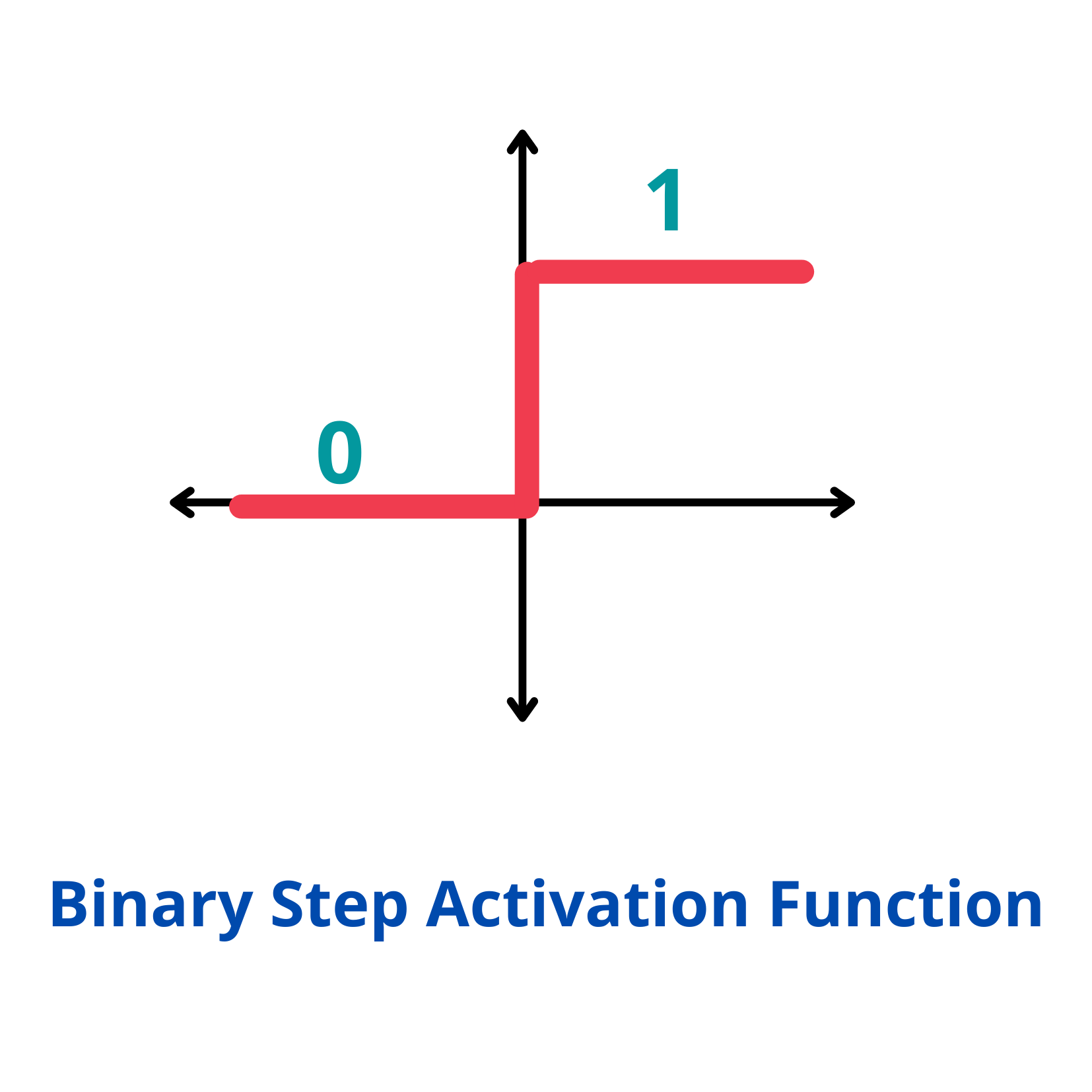
|
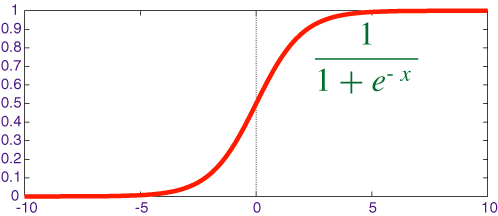
Sigmoid Function |
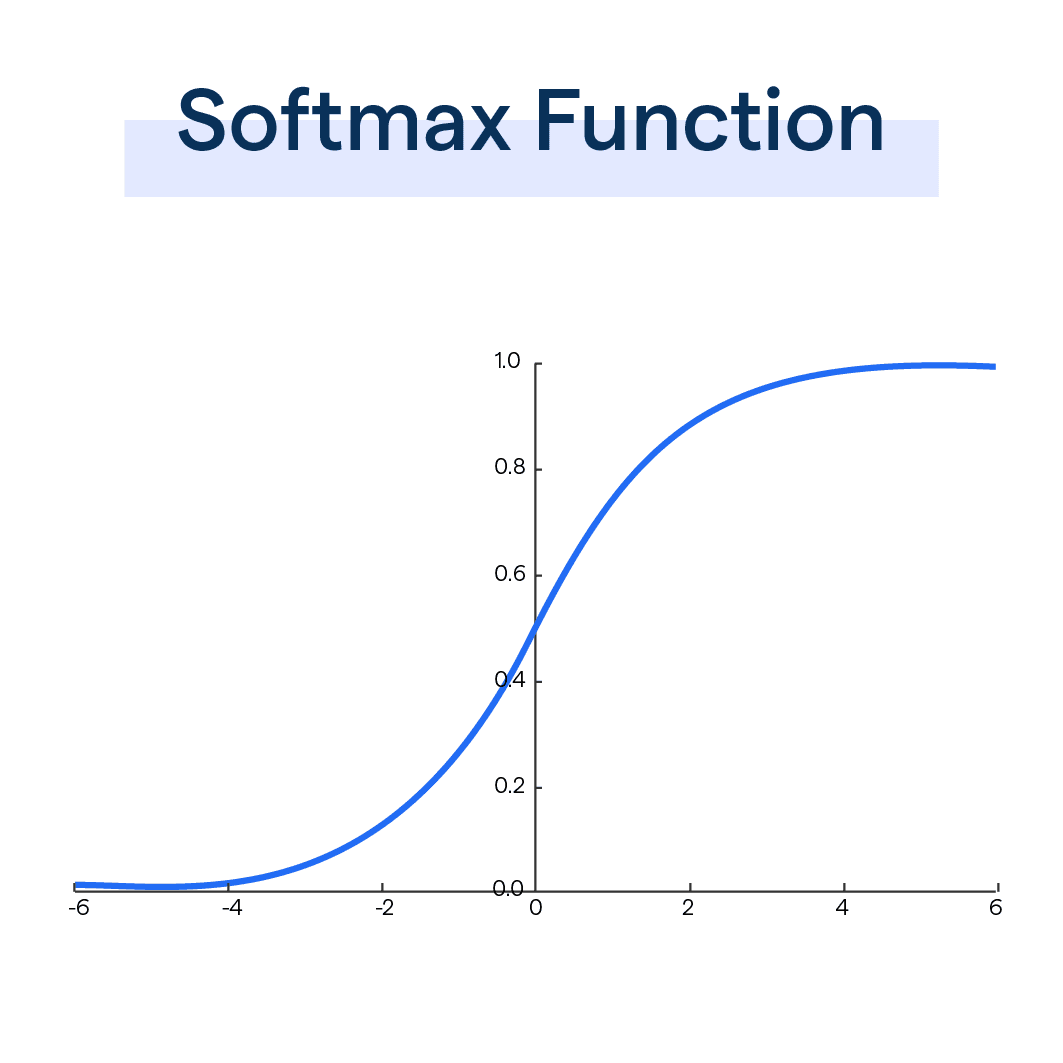
|
Sigmoid Function
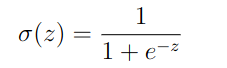 |
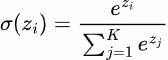
Softmax Function
|
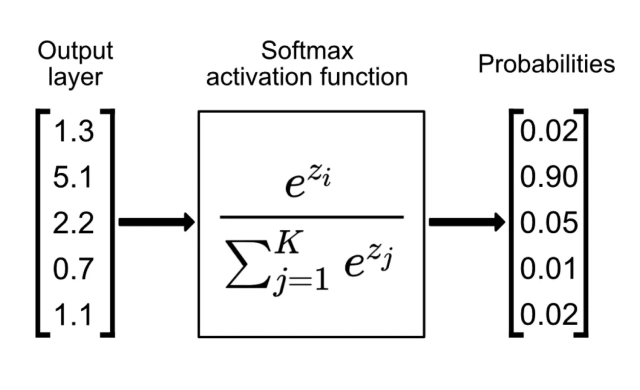
	In neural networks, logits are the raw, unnormalized scores
	produced at a model's output layer before the  activation
	function is applied.
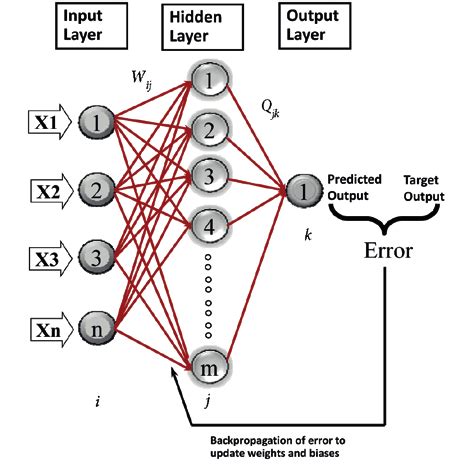
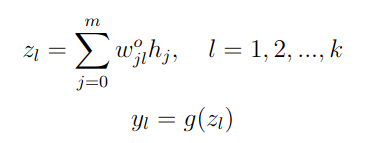
zl are logits g() is an activation function wo0l is the bias, and h0 = 1 |

|
|
|
Full Adder MLP Using Sigmoid Function
    Binary Full Adder
	x1
	x2
      +	x3
    -----------------
      C  S		(carry, sum)

	x3 x2 x1 | C  S
	---------|-----------
	0  0  0  | 0  0
	0  0  1  | 0  1
	0  1  0  | 0  1
	0  1  1  | 1  0
	1  0  0  | 0  1
	1  0  1  | 1  0
	1  1  0  | 1  0
	1  1  1  | 1  1

	3 inputs, 2 outputs, i.e. n1 = 4, K = 2
	use 4 hidden nodes, so m1 = 5

	See https://forejune.co/cuda/ai/mlp/mlp.html
// fullAdder.cpp
// https://forejune.co/cuda

#include <iostream>
#include <iomanip>
#include <cmath>

using namespace std;

const int n1 = 4;  //number of inputs and bias
const int m1 = 5;  //number of hidden nodes and bias
const int K = 2;   //number of outputs
const int numSamples = 8;
double inputs[numSamples][n1] =
{
 1, 0, 0, 0,     //x0=1, x1=0, x2=0, x3 = 0
 1, 0, 0, 1,
 1, 0, 1, 0,
 1, 0, 1, 1,
 1, 1, 0, 0,
 1, 1, 0, 1,
 1, 1, 1, 0,     //x0=1, x1=1, x2=1, x3=0
 1, 1, 1, 1      //x0=1, x1=1, x2=1, x2=1
};

double labels[numSamples][K] = {
                0, 0,
             	0, 1,
                0, 1,
                1, 0,
                0, 1,
                1, 0,
                1, 0,
                1, 1};	//target outputs (labels)
double w[n1][m1] = {
                0.97, 0.2, 0.7, 0.5, 0.65,
                0.73, 0.1, 0.9, 0.3, 0.23,
                0.37, 0.3, 0.8, 0.3, 0.19,
                0.2, 0.7, 0.3,  0.6, 0.87}; //random weights (input to hidden)
double wo[m1][K] = {
           0.76, 0.6, 0.1, 0.2, 0.7,
           0.67, 0.45, 0.3, 0.15, 0.4}; //random weights (hidden to output)

// Simple MLP class
class MLP
{
private:
    double a[m1];  //linear sum of products of inputs and weights
    double h[m1];  //hidden nodes h[j] = g(a[j])
    double y[K];   //predicted output
    double z[K];   //linear sum of products of weights and hidden nodes (logits)
    double eta; //learning rate
public:
    MLP(double learning_rate)
    {
	eta = learning_rate;
	h[0] = 1;	//for bias
    }

    //Sigmoid activation function
    double g(double x)
    {
      return 1.0 / (1.0 + exp(-x));
    }

    //Derivative of sigmoid function
    double gd(double x)
    {
       double s = g(x);

       return s * (1 - s);
     }


  //Forward propagation
  double* forward(double x[])
  {
	//hidden layer activation
	for (int j = 0; j < m1; j++) {
          a[j] = 0;
          for (int i = 0; i < n1; i++)
            a[j] += w[i][j] * x[i];
	   if ( j > 0 )
	     h[j] = g( a[j] );
         }
	 //output layer activation
	 for (int l = 0; l < K; l++){
	   z[l] = 0;
	   for(int j = 0; j < m1; j++)
	     z[l] += wo[j][l] * h[j];
	   y[l] = g( z[l] );
	  }

          return y;  //return output
    }

  //Backward propagation, yd is the desired output
  void backward(double yd[], double x[])
  {
    double delta[m1];
    double deltao[K];

   for (int l = 0; l < K; l++) {
      double e = yd[l] - y[l];  //output layer error
     deltao[l] = e * gd(z[l]);
   }
    //Compute hidden layer error
    for(int j = 0; j < m1; j++){
      delta[j] = 0;
      for(int l = 0; l < K; l++)
        delta[j] += deltao[l] * wo[j][l] * gd(a[j]);
    }

    //Update weights (hidden to output)
    for(int j = 0; j < m1; j++)
      for(int l = 0; l < K; l++)
       wo[j][l] += eta * deltao[l] * h[j];

     //Update weights (input to hidden)
     for(int i = 0; i < n1; i++)
	for(int j = 0; j < m1; j++)
	  w[i][j] += eta * delta[j] * x[i];
  }

  void get_input_data(int k, double x[])
  {
     for(int i=0; i < n1; i++)
       x[i]=inputs[k][i];
  }
  // Train the perceptron
  // eta = learning rate
  // epochs = number of times of training
  // numSamples = number of different input sets (x_data)
  // yd is target output
  void train(int numSamples, int epochs)
  {
    double x[n1];	//inputs
    double *yd = &labels[0][0];

    for (int epoch = 0; epoch < epochs; epoch++){
      for (int k = 0; k < numSamples; k++) {
	get_input_data(k, x);
        forward( x );
        backward(yd+k*K, x);
      }
    }
  }

    void printWeights()
    {
	cout << "\nMLP input to hidden weights: ";
	for(int i = 0; i < n1; i++){
	   cout << endl;
	  for(int j = 0; j < m1; j++)
	    printf("w[%d][%d]: %6.3f\t", i, j, w[i][j]);
	}
	cout << "\nMLP hidden to output weights:";
	for(int i = 0; i < m1; i++) {
	  cout << endl;
	  for(int j = 0; j < K; j++)
	    printf("wo[%d][%d]: %6.3f\t", i, j, wo[i][j]);
	}
    }

    ~MLP()
    {

    }
};

int classifier( double x)
{
  if ( x < 0.2 && x > -0.1)
    return 0;
  if ( x > 0.8 && x < 1.1)
    return 1;

  return -1;
}

int main()
{
    MLP mlp(0.5);

    mlp.train(8, 10000);

    // Test the MLP
    double *x;
    x = &inputs[0][0];
    cout << "Testing MLP:" << endl;
    for (int i = 0; i < 8; i++) {
      double *output = mlp.forward(x);
      cout << fixed << setprecision(0) << "  " << x[1] << " " <<
      x[2] << " "  << x[3] << " : " << classifier(output[0]) << " "
      << classifier (output[1]) << " (" << setprecision(2) <<  output[0]
      <<  " " << output[1]<<")" << endl;
      x += 4;
    }

    mlp.printWeights();
    cout << endl << "Hello, AI World!" << endl;
    return 0;
}
|
Full Adder MLP Using Softmax Function
	x3 x2 x1 | Class	0 1 2 3
	---------|-----------------------
	0  0  0  |  0		1 0 0 0
	0  0  1  |  1		0 1 0 0
	0  1  0  |  1		0 1 0 0
	0  1  1  |  2		0 0 1 0
	1  0  0  |  1		0 1 0 0
	1  0  1  |  2		0 0 1 0
	1  1  0  |  2		0 0 1 0
	1  1  1  |  3		0 0 0 1
const int n1 = 4;  //number of inputs and bias
const int m1 = 7;  //number of hidden nodes and bias
const int K = 4;   //number of outputs
const int numSamples = 8;
double inputs[numSamples][n1] =
{
 1, 0, 0, 0,     //x0=1, x1=0, x2=0, x3 = 0
 1, 0, 0, 1,
 1, 0, 1, 0,
 1, 0, 1, 1,
 1, 1, 0, 0,
 1, 1, 0, 1,
 1, 1, 1, 0,     //x0=1, x1=1, x2=1, x3=0
 1, 1, 1, 1      //x0=1, x1=1, x2=1, x2=1
};

double labels[numSamples][K] = {
 1, 0, 0, 0,
 0, 1, 0, 0,
 0, 1, 0, 0,
 0, 0, 1, 0,
 0, 1, 0, 0,
 0, 0, 1, 0,
 0, 0, 1, 0,
 0, 0, 0, 1};

double w[n1][m1] = {
                0.97, 0.2, 0.7, 0.5, 0.65,
                0.73, 0.1, 0.9, 0.3, 0.23,
                0.37, 0.3, 0.8, 0.3, 0.19,
                0.2, 0.7, 0.3,  0.6, 0.87}; //random weights (input to hidden)

double wo[m1][K] = {
                0.76, 0.6, 0.1, 0.2, 0.7,
                0.67, 0.45, 0.3, 0.15, 0.4,
                0.12, 0.87, 0.9, 0.6, 0.2,
                0.8, 0.5, 0.44, 0.73, 0.52
}; //random weights (hidden to output)

class MLP
{
.....

  //denominator of softmax
  double sumExp()
  {
        double sum = 0;
        for (int l = 0; l < K; l++)
          sum += exp( z[l] );

        return sum;
  }

  //Forward propagation
  double* forward(double x[])
  {
        //hidden layer activation
        for (int j = 0; j < m1; j++) {
          a[j] = 0;
          for (int i = 0; i < n1; i++)
            a[j] += w[i][j] * x[i];
           if ( j > 0 )
             h[j] = g( a[j] );
         }
         //output layer activation
         for (int l = 0; l < K; l++){
           z[l] = 0;
           for(int j = 0; j < m1; j++)
             z[l] += wo[j][l] * h[j];
          }

          //softmax
          double denom = sumExp();
          for (int l = 0; l < K; l++)
            y[l] = exp(z[l]) / denom;

          return y;  //return output
    }

   void printProbabilities( double *output )
   {
     for (int l = 0; l < K; l++)
         printf("%4.2f,  ", output[l] );
     printf("\t");
   }

   int predict(double x[])
   {
        double *output = forward( x );
        printProbabilities( output );
        int label = 0;
        double maxProb = output[0];
        for (int l = 0; l < K; l++) {
            if (output[l] > maxProb) {
                maxProb = output[l];
                label = l;
            }
        }
        return label;
    }
};

int main()
{
    MLP mlp(0.5);

    mlp.train(8, 10000);

    // Test the MLP
    double *x;
    x = &inputs[0][0];
    cout << "Testing MLP:" << endl;
    for (int i = 0; i < 8; i++) {
      int label = mlp.predict( x );
      cout << fixed << setprecision(0) << "  " << x[1] << " " <<
      x[2] << " "  << x[3] << " : " << label << " "  << endl;
      x += 4;
    }

    cout << endl << "Hello, AI World!" << endl;
    return 0;
}
|
A simplified version of K-means clustering using MLP
// softmaxDemo.cpp
// https://forejune.co/cuda

#include <iostream>
#include <iomanip>
#include <cmath>

using namespace std;

const int n1 = 3;  //number of inputs and bias
const int m1 = 7;  //number of hidden nodes and bias
const int K  = 3;  //3 classes, number of outputs
const int numSamples = 6;
double w1[n1][m1];

// inputs could be normalized (x, y) coordinates
double inputs[numSamples][n1] =
{
 1, 0.1, 0.2,
 1, 0.8, 0.9,
 1, 0.3, 0.6,
 1, 0.5, 0.4,
 1, 0.2, 0.3,
 1, 0.7, 0.8};

double labels[numSamples][K] = {
 1, 0, 0,	//class 0	(cluster 0)
 0, 0, 1,	//class 2
 0, 1, 0,	//class 1
 0, 1, 0,	//class 1
 1, 0, 0, 	//class 0
 0, 0, 1};	//class 2

double w[n1][m1] = {
	0.97, 0.2, 0.7, 0.5, 0.65, 0.1, 0.9,
        0.73, 0.1, 0.9, 0.3, 0.23, 0.2, 0.8,
        0.2, 0.7, 0.3,  0.6, 0.87, 0.4, 0.7}; //random weights (input to hidden)

double wo[m1][K] = {
	0.76, 0.6, 0.1,
	0.2, 0.7, 0.67,
	0.45, 0.3, 0.15,
	0.4, 0.8, 0.5,
	0.44, 0.73, 0.52
}; //random weights (hidden to output)

// Simple MLP class
class MLP
{
private:
    double a[m1];  //linear sum of products of inputs and weights
    double h[m1];  //hidden nodes h[j] = g(a[j])
    double y[K];   //predicted output
    double z[K];   //linear sum of products of weights and hidden nodes
    double eta; //learning rate
public:
    MLP(double learning_rate)
    {
	eta = learning_rate;
	h[0] = 1;	//for bias
    }

    //Sigmoid activation function
    double g(double x)
    {
      return 1.0 / (1.0 + exp(-x));
    }

    //Derivative of sigmoid function
    double gd(double x)
    {
       double s = g(x);

       return s * (1 - s);
     }

    //denominator of softmax
    double sumExp()
    {
        double sum = 0;
	for (int l = 0; l < K; l++)
	  sum += exp( z[l] );

        return sum;
    }


  //Forward propagation
  double* forward(double x[])
  {
	//hidden layer activation
	for (int j = 0; j < m1; j++) {
          a[j] = 0;
          for (int i = 0; i < n1; i++)
            a[j] += w[i][j] * x[i];
	   if ( j > 0 )
	     h[j] = g( a[j] );
         }
	 //output layer activation
	 for (int l = 0; l < K; l++){
	   z[l] = 0;
	   for(int j = 0; j < m1; j++)
	     z[l] += wo[j][l] * h[j];   //logits
	  }

	  //softmax
	  double denom = sumExp();
	  for (int l = 0; l < K; l++)
	    y[l] = exp(z[l]) / denom;

          return y;  //return output
  }

  //Backward propagation, yd is the desired output
  void backward(double yd[], double x[])
  {
    double delta[m1];
    double deltao[K];

   for (int l = 0; l < K; l++) {
      double e = yd[l] - y[l];  //output layer error
      deltao[l] = e * gd(z[l]);
   }

   for(int j = 0; j < m1; j++){
      delta[j] = 0;
      for(int l = 0; l < K; l++)
        delta[j] += deltao[l] * wo[j][l] * gd(a[j]);
   }

   //Update weights (hidden to output)
   for(int j = 0; j < m1; j++)
     for(int l = 0; l < K; l++)
       wo[j][l] += eta * deltao[l] * h[j];

     //Update weights (input to hidden)
     for(int i = 0; i < n1; i++)
	for(int j = 0; j < m1; j++)
	  w[i][j] += eta * delta[j] * x[i];
  }

  void get_input_data(int k, double x[])
  {
     for(int i=0; i < n1; i++)
       x[i]=inputs[k][i];
  }

  // Train the perceptron
  // eta = learning rate
  // epochs = number of times of training
  // numSamples = number of different input sets (x_data)
  // yd is target output
  void train(int numSamples, int epochs)
  {
    double x[n1];	//inputs
    double *yd = &labels[0][0];

    for (int epoch = 0; epoch < epochs; epoch++){
      for (int k = 0; k < numSamples; k++) {
	get_input_data(k, x);
        forward( x );
        backward(yd+k*K, x);
      }
    }
  }

   void printProbabilities( double *output )
   {
     for (int l = 0; l < K; l++)
	 printf("%4.2f,  ", output[l] );
     printf("\t");
   }

   int predict(double x[])
   {
	double *output = forward( x );
	printProbabilities( output );
        int label = 0;
        double maxProb = output[0];
        for (int l = 0; l < K; l++) {
            if (output[l] > maxProb) {
                maxProb = output[l];
                label = l;
            }
        }
        return label;
    }

    void printWeights()
    {
	cout << "\nMLP input to hidden weights: ";
	for(int i = 0; i < n1; i++){
	   cout << endl;
	  for(int j = 0; j < m1; j++)
	    printf("w[%d][%d]: %5.3f\t", i, j, w[i][j]);
	}
	cout << "\nMLP hidden to output weights:";
	for(int i = 0; i < m1; i++) {
	  cout << endl;
	  for(int j = 0; j < K; j++)
	    printf("wo[%d][%d]: %5.3f\t", i, j, wo[i][j]);
	}
    }

    ~MLP()
    {

    }
};

int main()
{
    MLP mlp(0.5);
    mlp.train(6, 10000);

    // Test the MLP
    double *x;
    const int ntest = 9;
    double test_inputs[ntest][n1] =
    {
 	1, 0.1, 0.2,
 	1, 0.8, 0.9,
 	1, 0.3, 0.6,
 	1, 0.5, 0.4,
 	1, 0.2, 0.3,
 	1, 0.7, 0.8,
	1, 0.1, 0.1,
	1, 0.5, 0.5,
	1, 0.9, 0.9
    };
    x = &test_inputs[0][0];
    cout << "Testing MLP:" << endl;
    for (int i = 0; i < ntest; i++) {
      int label = mlp.predict( x );
      cout << fixed << setprecision(2) << "  " <<  x[1] << " "  << x[2]
      << " : " "Class " << label <<  " "  << endl;
      x += n1;
    }

    return 0;
}
|
Outputs:Testing MLP: 1.00, 0.00, 0.00, 0.10 0.20 : Class 0 0.00, 0.00, 1.00, 0.80 0.90 : Class 2 0.00, 0.99, 0.00, 0.30 0.60 : Class 1 0.00, 0.99, 0.00, 0.50 0.40 : Class 1 0.99, 0.01, 0.00, 0.20 0.30 : Class 0 0.00, 0.00, 1.00, 0.70 0.80 : Class 2 1.00, 0.00, 0.00, 0.10 0.10 : Class 0 0.00, 0.99, 0.01, 0.50 0.50 : Class 1 0.00, 0.00, 1.00, 0.90 0.90 : Class 2