| |
// tictactoe.cu
// CUDA implementation of Q-Learning for Tic-Tac-Toe
#include <iostream>
#include <ctime>
#include <stdio.h>
#include <curand.h>
#include <curand_kernel.h>

using namespace std;

// Constants
const double alpha = 0.1;
const double Gamma = 0.9;
const double epsilon = 0.1;
#define Nstates 19683
#define BLOCK_SIZE 256

enum Player {EMPTY=0, X, O};

// Device globals
__device__ Player d_board[9];
__device__ double d_Q[Nstates][9];  // Q-table
__device__ curandState_t d_rand_states[2][Nstates];  ;  // Random states for each thread

// Host board for display purposes
Player h_board[9];

/*
 * CUDA Kernel to initialize Q-table and random states
 */
__global__ void initQAndRandomStates(unsigned int seed, unsigned int seed1)
{
    int idx = blockIdx.x * blockDim.x + threadIdx.x;

    if (idx < Nstates) {
        // Initialize Q-table
        for (int i = 0; i < 9; i++)
            d_Q[idx][i] = 0.0;

        // Initialize random states for each player
        curand_init(seed, idx, 0, &d_rand_states[0][idx]);
        curand_init(seed1, idx, 0, &d_rand_states[1][idx]);
    }
}

/*
 * Reset the board
 */
__device__ void resetBoard()
{
    for (int i = 0; i < 9; i++)
        d_board[i] = EMPTY;
}

/*
 * Get state of the board (device version)
 */
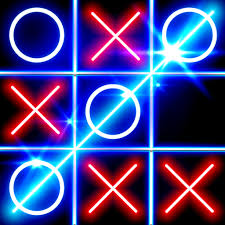
__device__ int getState()
{
    int s = 0, m = 1;
    for (int i = 0; i < 9; i++) {
        s += m * d_board[i];
        m = m * 3;
    }
    return s;
}

/*
 * Check if a player has won (device version)
 */
__device__ bool isWinning(Player player)
{
    const int w[8][3] = {
        {0,1,2},{3,4,5},{6,7,8},
        {0,3,6},{1,4,7},{2,5,8},
        {0,4,8},{2,4,6}
    };

    for (int i = 0; i < 8; i++) {
        if (d_board[w[i][0]] == player &&
            d_board[w[i][1]] == player &&
            d_board[w[i][2]] == player) {
            return true;
        }
    }
    return false;
}

/*
 * Check if the game is a draw (device version)
 */
__device__ bool isDraw()
{
    for (int i = 0; i < 9; i++)
        if (d_board[i] == EMPTY)
            return false;

    return true;
}

/*
 * Choose an action (device version)
 */
__device__ int chooseAction(int s, bool explore, curandState_t* state)
{
    //curand_uniform returns a float between 0 and 1
    if (explore && curand_uniform(state) < epsilon) {
        // Exploration
        int n = 0;
        int moves[9];

        for (int i = 0; i < 9; i++)
            if (d_board[i] == EMPTY)
                moves[n++] = i;

        if (n == 0) return -1;
        return moves[(int)(curand_uniform(state) * n)];
    } else {
        // Exploitation
        int bestMove = -1;
        double max_q = -1000.0;

        for (int i = 0; i < 9; i++) {
            if (d_board[i] == EMPTY) {
                double q = d_Q[s][i];
                if (q > max_q) {
                    max_q = q;
                    bestMove = i;
                }
            }
        }
        return bestMove;
    }
}

/*
 * Update Q-table (device version)
 */
__device__ void updateQtable(int state, int action, double reward, int nextState)
{
    double maxQnext = 0.0;

    for (int j = 0; j < 9; j++) {
        double q = d_Q[nextState][j];
        if (q > maxQnext) maxQnext = q;
    }

    d_Q[state][action] += alpha * (reward + Gamma * maxQnext - d_Q[state][action]);
}

//CUDA synchronization functions like  atomicCAS(), atomicAdd() do not
//work well in my machine. So, use some other methods
__global__ void trainKernel(int episodes) // int *turn)
{
  __shared__ int episode;
  __shared__ int turn;
  __shared__ bool youLost[3];
  __shared__ int nextState;
  __shared__ bool draw;
  int tid = threadIdx.x;   //tid = 1: X, 2: O
  if ( tid == 0 ) episode = 0;
  __syncthreads();
  while (episode < episodes){
    Player currentPlayer;
    if ( tid == 0 ) {
      resetBoard();
      turn = 1;         //start with X
    }
    __syncthreads();
    if ( tid > 0 ) {
      curandState_t local_state = d_rand_states[tid-1][episode % Nstates];
      currentPlayer = (Player) tid;
      int action[9], state[9], n = 0;
      youLost[tid] = false;
      draw = false;
      int k = 0;
      while ( k++ < 100) {
        double reward;
        if ( tid == turn ) {
           if (draw)
                break;
           if (youLost[tid]) {
             reward = -1;
             for (int i = 0; i < n; i++) {
               if ( state[i] >= 0 )
                updateQtable(state[i], action[i], reward, nextState);
             }
             break;
           }
           state[n] = getState();
           action[n] = chooseAction(state[n], true, &local_state);
           if (action[n] < 0)break;
           d_board[action[n]] = currentPlayer;

           nextState = getState();
           bool win = isWinning(currentPlayer);
           draw = isDraw();
           n++;
           int t = (tid == 1)? 2: 1;    // indexing the other thread
           if (win || draw) {
             if( win ){
               reward = 1;
               youLost[t] = true;
             } else {
               reward = 0;
             }
             for (int i = 0; i < n; i++) {
                if ( state[i] >= 0 )
                 updateQtable(state[i], action[i], reward, nextState);
             }
             turn = t;
             break;
           } //if win || draw
        turn = t;
        printf("");     //time delay
      }  //while k
     } //if turn == tid
    }   //if tid > 0
    else   //tid == 0
        episode++;
    __syncthreads();
  } //while episode < episodes
}
/*
 * Host function to train the AI
 */
void train(int episodes, bool initialize)
{
  if (initialize) {
    // Initialize Q-table and random states on device
    int blocks = ceil((float) Nstates / BLOCK_SIZE);
    unsigned int seed = time(0);
    unsigned int seed1 = time(0) + 31415926;
    initQAndRandomStates<<< blocks, BLOCK_SIZE>>>(seed, seed1);
    cudaDeviceSynchronize();
  }
  // Run training episodes
  trainKernel<<< 1, 3>>>(episodes);
  cudaDeviceSynchronize();
  cout << "Training completed!" << endl;
}

/*
 * Print the board (host version)
 */
void printBoard()
{
    char symbols[3] = {' ', 'X', 'O'};
    for (int i = 0; i < 3; ++i) {
        for (int j = 0; j < 3; ++j) {
            Player p = h_board[3*i+j];
            cout << symbols[p];
            if (j < 2) cout << " | ";
        }
        cout << endl;
        if (i < 2) cout << "---------" << endl;
    }
}
/*
 * Host function to play against the AI
 */
void play()
{
    // Copy Q-table to host for CPU-based play
    double h_Q[Nstates][9];
    cudaMemcpyFromSymbol(h_Q, d_Q, sizeof(double) * Nstates * 9);

    // Reset board
    for (int i = 0; i < 9; i++)
        h_board[i] = EMPTY;

    Player currentPlayer = X;
    cout << "You are 'O'. AI is 'X'!" << endl;

    while (true) {
        if (currentPlayer == O) {
            // Human's turn
            int move;
            cout << "Your move (0-8): ";
            cin >> move;

            if (move < 0 || move > 8 || h_board[move] != EMPTY) {
                cout << "Invalid move. Try again!" << endl;
                continue;
            }

            h_board[move] = O;
        } else {
            // AI's turn
            int state = 0, m = 1;
            for (int i = 0; i < 9; i++) {
                state += m * h_board[i];
                m = m * 3;
            }

            // Find best move (exploitation only)
            int bestMove = -1;
            double max_q = -1000.0;

            for (int i = 0; i < 9; i++) {
                if (h_board[i] == EMPTY) {
                    double q = h_Q[state][i];
                    if (q > max_q) {
                        max_q = q;
                        bestMove = i;
                    }
                }
            }

            if (bestMove == -1) {
                cout << "No valid moves left!" << endl;
                break;
            }

            cout << "AI moves at " << bestMove << endl;
            h_board[bestMove] = X;
        }

        printBoard();

        // Check for win/draw
        bool win = false;
        const int w[8][3] = {
            {0,1,2},{3,4,5},{6,7,8},
            {0,3,6},{1,4,7},{2,5,8},
            {0,4,8},{2,4,6}
        };

        for (int i = 0; i < 8; i++) {
            if (h_board[w[i][0]] == currentPlayer &&
                h_board[w[i][1]] == currentPlayer &&
                h_board[w[i][2]] == currentPlayer) {
                win = true;
                break;
            }
        }

        if (win) {
            cout << (currentPlayer == X ? "AI wins!" : "You win!") << endl;
            break;
        }

        bool draw = true;
        for (int i = 0; i < 9; i++) {
            if (h_board[i] == EMPTY) {
                draw = false;
                break;
            }
        }

        if (draw) {
            cout << "It's a draw!" << endl;
            break;
        }

        currentPlayer = (currentPlayer == X ? O : X);
    }
}
int main()
{
    srand(time(0));

    // Train the AI from beginning
    train(50000, true);

    // Play against the AI
    while (true) {
      play();
      char c;
      cout << "Play another one (y/n)? ";
      cin >> c;
      if (c == 'n') break;
      train(200, false); //further training without initialization
    }

    return 0;
}
|

|






 Represent a state by an integer: