Why AI Developments Suddenly Advance so Fast?
Materials available at:
1. Predicting The Future
At the entrance of a striking building in the Hong Kong Science Park, a display board lists ten predictions about the future of fiber optics -- made decades ago by Nobel laureate Dr. Charles Kuen Kao.

In 2009, Dr. Kao received the Nobel Prize in Physics for his "groundbreaking achievements concerning the transmission of light in fibres for optical communication." Widely regarded as the "Father of Fiber Optics," his seminal 1966 research demonstrated that ultra-pure glass fibers could transmit light over vast distances -- an insight that laid the essential groundwork for today's high-speed internet and global telecommunications networks.
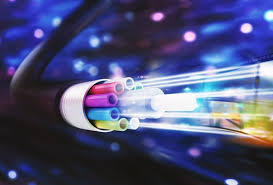
Dr. Kao was widely celebrated as the Father of fiber optics. He made enthusiastic predictions of its future applications in communications. Yet, as it turns out, of the ten predictions he made, only one is correct. |
2. Singularity
Nearly twenty years ago, I read the book, ``The Singularity Is Near: When Humans Transcend Biology, by Ray Kurzwell.
Since then I paid close attention to the pace of technological progress.
In the book, Kurzweil argues that technological advancement is not linear but exponential,
most notably, that computing power doubles approximately every two years.
He predicts that by around 2045, technology will have advanced to such a degree that it effectively awakens the universe, a moment he refers to as the Singularity.
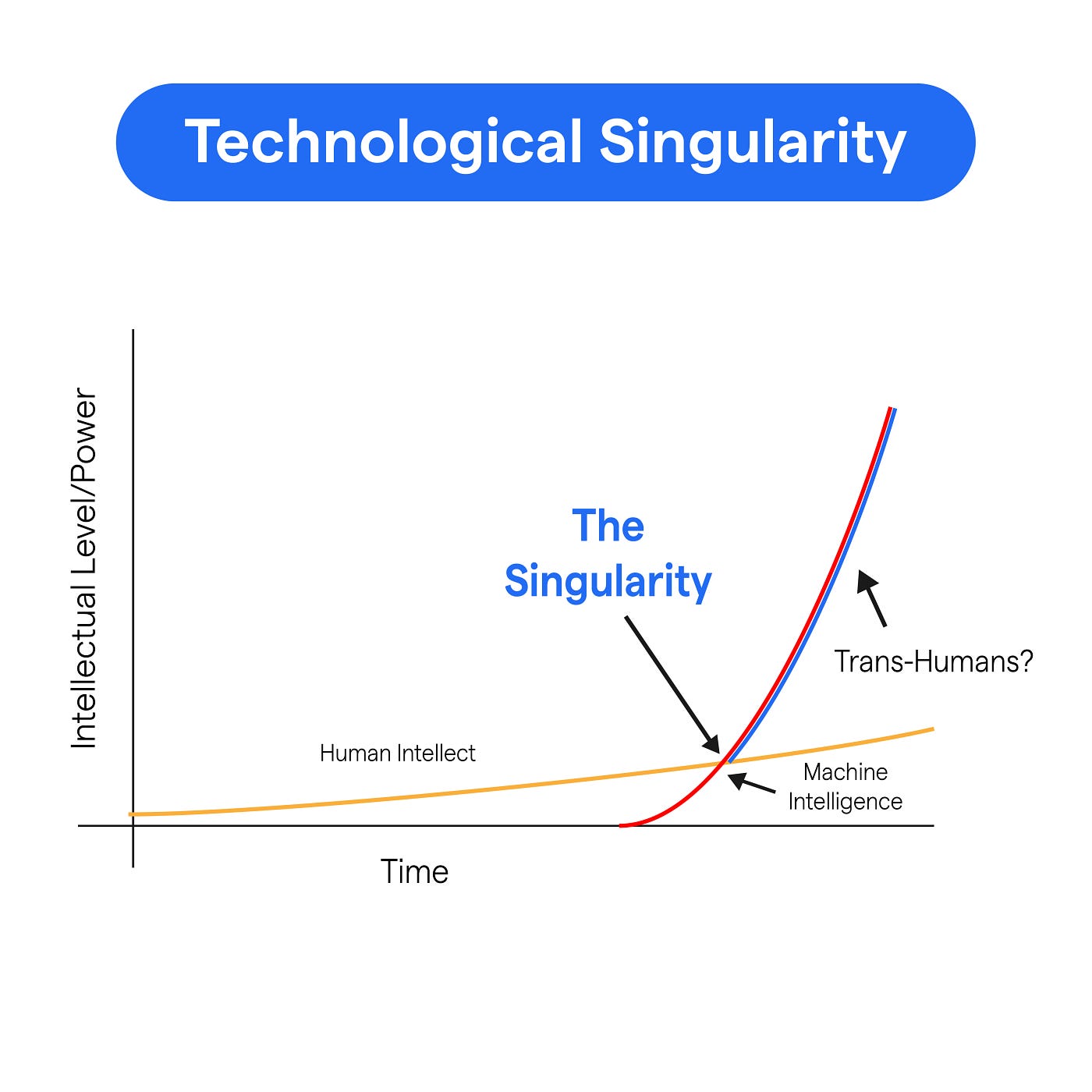
If this trend continues, the gap will keep expanding exponentially until the Singularity is reached. That said, a growing technological advantage does not guarantee America's safety. United States might soon successfully build the Golden Dome that could defend America from any nuclear attack as a result of this exponential advance in technolog. However, America's adversaries may not need to outmatch it technologically; they could instead weaken it and conquer America from within. By generating huge trade surpluses with the rest of the world and recycling those funds back into the U.S. economy, they can penetrate American institutions, influence public opinion and politics, and undermine national cohesion from the inside. Unless the massive U.S. trade deficit is corrected, this flow of infiltration money will persist and America will remain extremely vulnerable. 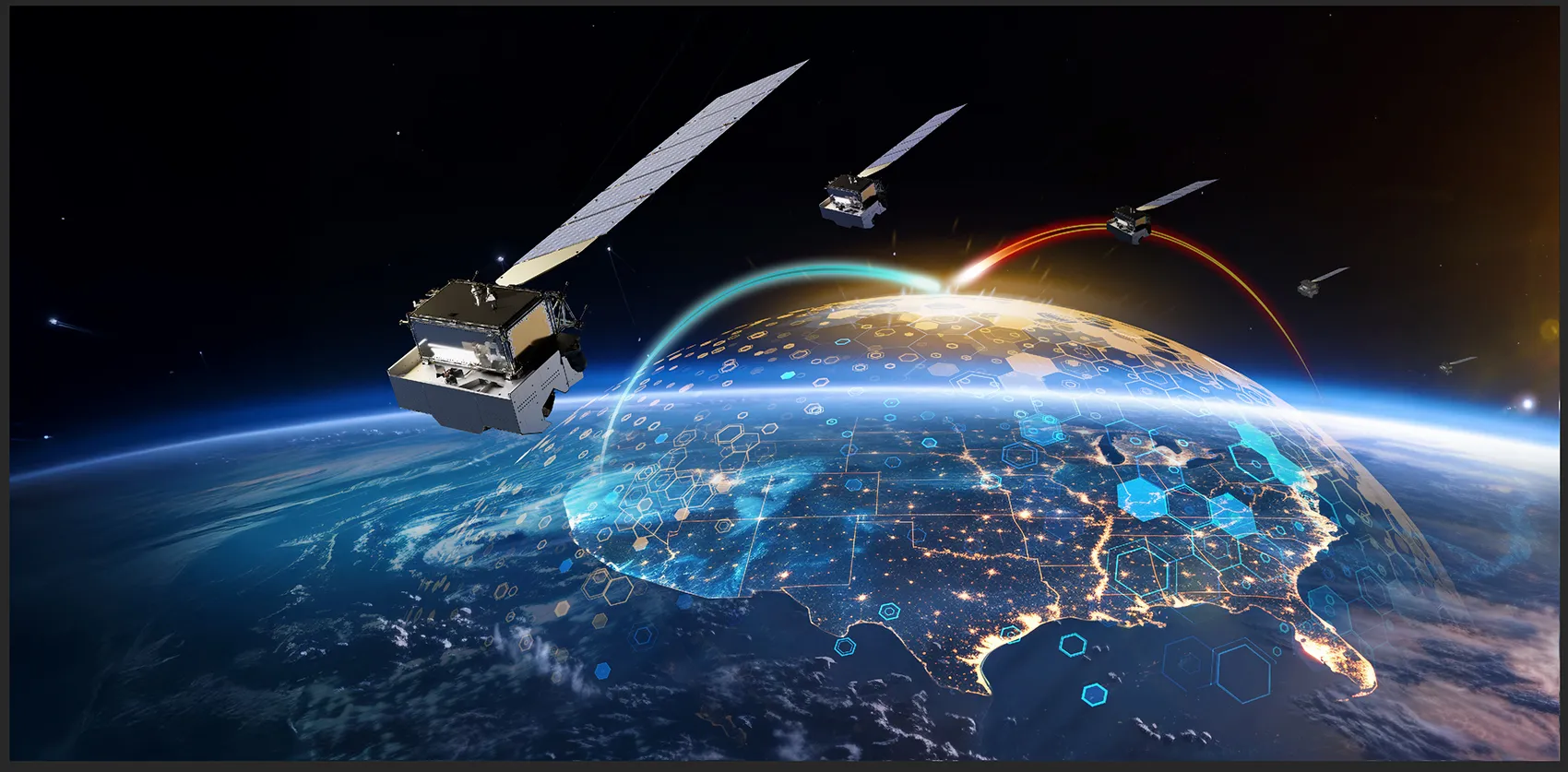

|
3. AI Development
|
In recent years, AI tools have been evolving at a breathtaking pace, and their impact on society is unmistakable.
Many people feel that AI is advancing so rapidly that it evokes an unprecedented sense of awe -- and, for some, unease.
Just a few weeks ago, the U.S. government took the unusual step of ordering AI company Anthropic to suspend global access to its advanced models, Fable 5 and Mythos 5. Citing national security concerns, officials argued that the models' safeguards could potentially be bypassed to identify and exploit software vulnerabilities. Because Anthropic could not reliably verify the nationality of every user -- and the order explicitly prohibited access by foreign nationals -- the company decided to disable the models entirely for all users worldwide. The move underscores just how deeply AI is beginning to disrupt not only technology, but also policy, security, and everyday life. 
The AI models in use today are largely built on neural networks and the backpropagation algorithm, a foundation laid over 40 years ago. In 1986, Geoffrey Hinton, David Rumelhart, and Ronald J. Williams published a highly influential paper that popularized backpropagation for training multi-layer neural networks, although they were not the first to propose the approach. Modern transformers, which power much of today's AI, still rely on backpropagation to extend and scale neural network training. 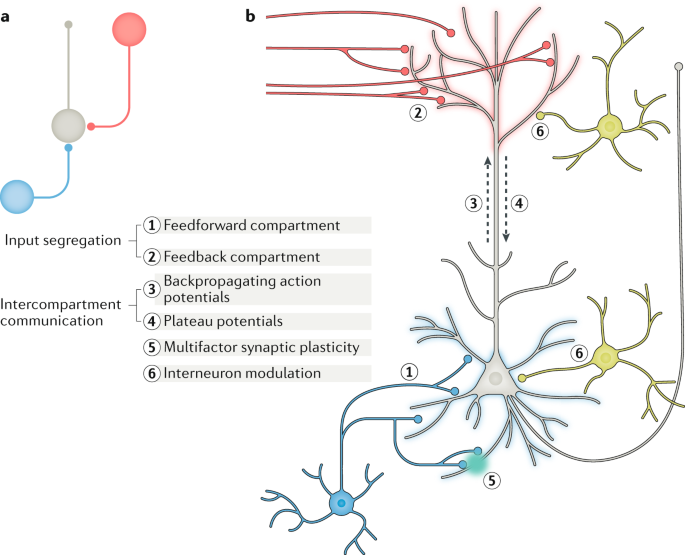
For decades following that paper, however, these algorithms remained largely impractical due to limited computational speed. But with the exponential growth in computing power over recent years, they have suddenly become the centerpiece of modern AI -- the proverbial "pearl in the crown." Interestingly, these algorithms don't demand advanced mathematics; they mainly draw on basic linear algebra and elementary calculus. This accessibility has enabled many motivated young learners to enter the AI field and make meaningful contributions in a relatively short time. |
4. AI Consciousness
|
The capabilities of today's AI agents are nothing short of astonishing.
In a single minute, an AI can generate pages of elegant, functional code -- a task that might take a human programmer several weeks to complete.
In many domains, these systems already outperform us in both speed and breadth of knowledge.
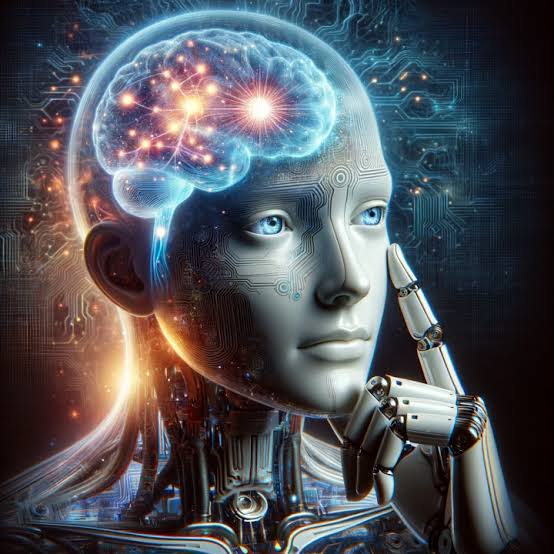
Consider what consciousness requires in the natural world. Every conscious animal possesses a brain composed of interconnected neurons. Even in thought experiments -- such as Ned Block's famous "China brain" from 1978, which challenged functionalism by imagining an entire nation simulating a mind -- the key element is interconnection. In that scenario, each person acts as a neuron, linked to others via two-way radios, forming a vast network. This simulated brain is then connected to a robotic body; when the body senses heat or pain, the signals are processed through the network, and a response -- like saying "ouch" -- emerges. Whether such a system would truly possess a mind remains an open question. But one thing is clear: physical interconnection among neurons is the foundational substrate of consciousness.
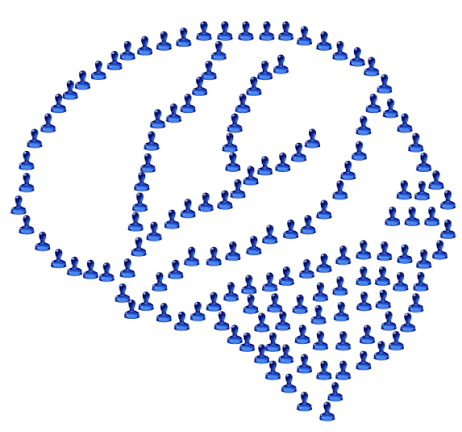
That said, this does not rule out the possibility of conscious machines in the future. AI is already accelerating research in nanotechnology, and as that field advances, we may eventually be able to construct physical neural networks -- real, hardware-based systems with genuine interconnections. It is in such physically embodied networks, we believe, that consciousness could truly emerge. |
5. Dr. Gao's Correct Prediction
|
The only prediction made by Dr. Gao at the outset of this article that proved correct is the tenth -- namely, that all his previous nine predictions would turn out to be wrong.
In that sense, he demonstrated a certain foresight, albeit a self-deprecating one.
As the self-proclaimed ``Father of Fiber Optics," it was only natural for him to be optimistic and passionate about its applications in communication. Yet even he could not have anticipated that Wi-Fi technology would eventually overshadow many of the very use cases he envisioned for fiber optics. This serves as a humbling reminder: as the saying goes, ``What we don't know far exceeds what we do know." So, if you find our own predictions off the mark, take it not as a failure, but as a reflection of the inherent limits of foresight.

|